
Ulrike Draesner
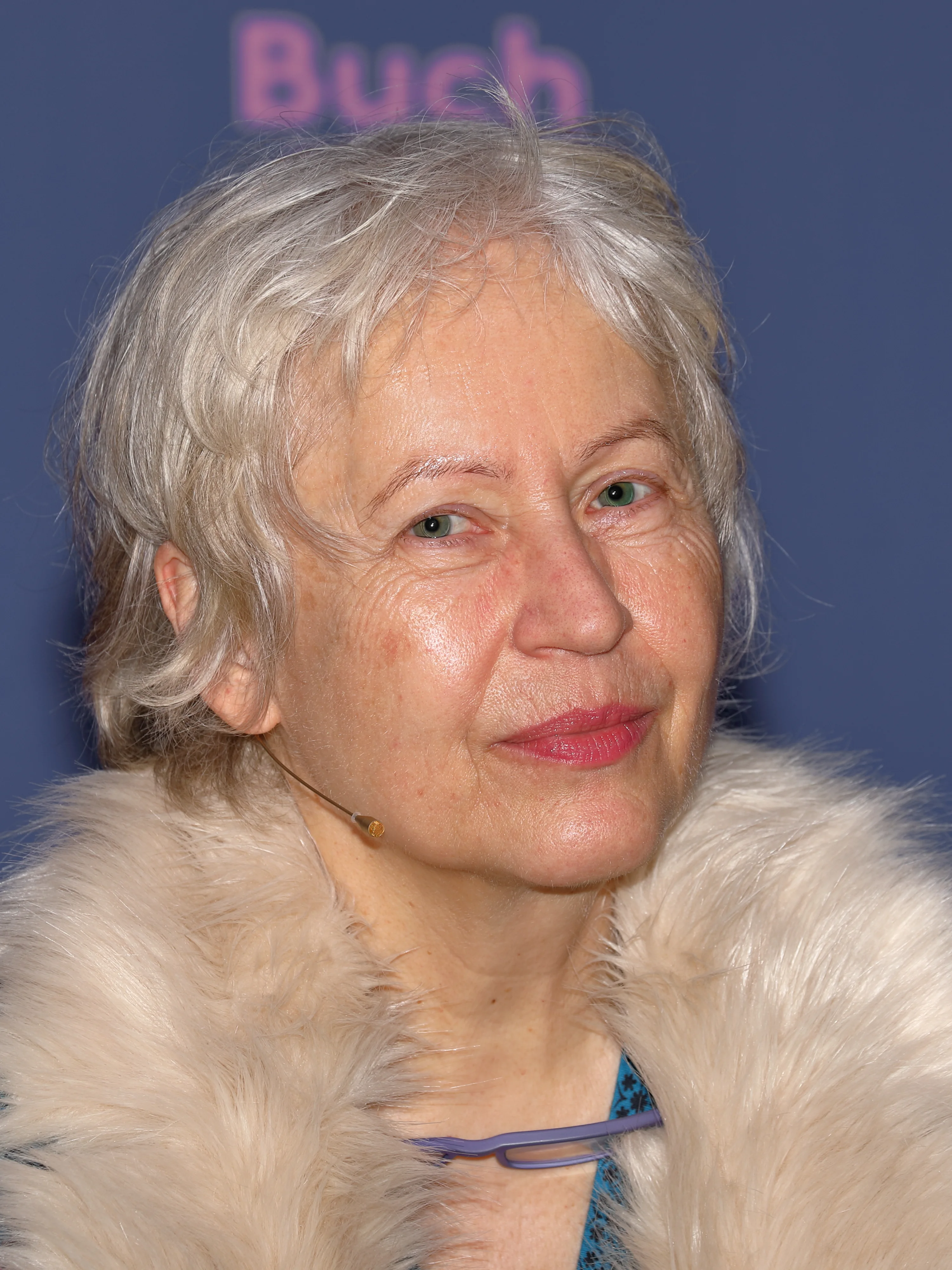
Image from Wikipedia
Image from Wikipedia
Ulrike Draesner – one of the most precise voices in contemporary German literature
Between Poetry, Novel, and Intellectual Boundary-Testing
Ulrike Draesner, born on January 20, 1962, in Munich, is one of the most prominent authors in contemporary German literature. She lives as a freelance writer in Berlin and Leipzig, combining poetry, prose, essays, translation, and interdisciplinary projects into a distinctive literary style. Since 2018, she has been the head of the German Literature Institute in Leipzig; her work is academically grounded, poetically experimental, and thematically extraordinarily wide-ranging. ([draesner.de](https://www.draesner.de/autorin/?lang=de))
Biography: Background, Education, and the Path to Literature
Draesner's childhood was shaped by a multifaceted family background: Silesian-Bavarian influences, Catholic and Protestant traditions, as well as various dialects and social environments converged in her biography. This background provides an important resonance space for her later writing, where heritage, memory, and linguistic consciousness play a central role. The path to literature initially led her through a law degree begun in 1981 in Munich, followed by a scholarship year in Oxford and a switch to English Studies, German Studies, and Philosophy. In 1992, she earned her doctorate in German Medieval Studies with a dissertation on intertextuality theories. ([draesner.de](https://www.draesner.de/autorin/?lang=de))
This academic formation already explains much of the precision of her texts: Draesner works with literary references, historical depths, and a reflective language that never remains merely decorative. She navigates confidently between scientific analysis and artistic imagination, between research and storytelling. It is precisely from this interplay that arises the rare mixture of intellectual authority and narrative openness for which she is valued by readers and critics alike. ([draesner.de](https://www.draesner.de/autorin/?lang=de))
Career Beginnings and Literary Breakthrough
In 1995, her first book, gedächtnisschleifen, was published, a collection of poems that already hints at her later versatility. In the following years, Draesner published novels, short story collections, essays, and further poetic works in a steady back-and-forth. She does not have a music career in the traditional sense; however, as a literary artist, she works with a pronounced sense of rhythm, with sound, beat, and inner movement of language—a quality that is often highlighted in receptions. ([draesner.de](https://www.draesner.de/autorin/?lang=de))
Her literary development became particularly visible with works that go thematically and formally beyond classical storytelling. Important milestones include the novels Spiele and Sieben Sprünge vom Rand der Welt, followed by Schwitters and Die Verwandelten. The author does not write along simple genre boundaries, but as a boundary-crosser between fiction and science, between personal experience and historical reflection. ([draesner.de](https://www.draesner.de/autorin/?lang=de))
Works and Literary Discography: Novels, Poetry, Essays
Ulrike Draesner's oeuvre encompasses seven poetry collections, seven novels, several short story and essay collections, radio plays, translations, and numerous interdisciplinary projects. Her development towards nature writing and place-based writing is particularly striking, as seen in Mein Hiddensee and London–Lieblingsorte, as well as in the memoir Eine Frau wird älter and the novella Kanalschwimmer. This literary range makes her an author who constantly questions not only themes but also forms anew. ([draesner.de](https://www.draesner.de/autorin/?lang=de))
With Sieben Sprünge vom Rand der Welt, Draesner published an award-winning novel in 2014 that literarily condenses family and escape stories. In 2020, Schwitters followed, and in 2023, Die Verwandelten was released, the third part of her grand trilogy on flight and displacement. In 2024, she presented zu lieben, a new, deeply personal autofiction that tells of the love between mother and child, thus striking another tone in her oeuvre. ([draesner.de](https://www.draesner.de/autorin/?lang=de))
Style and Themes: Language as an Instrument of Knowledge
Draesner's style combines poetic condensation with analytical sharpness. Her texts engage with neuroscience, transplantation and reproductive medicine, as well as gender theory, while also integrating the medial and historical dimensions of Europe. Central remains the question of how language shapes thought and how literary writing makes knowledge visible that often eludes everyday life. ([draesner.de](https://www.draesner.de/autorin/?lang=de))
Characteristic is also her narrative humor, which never undermines the seriousness of her themes but adds additional depth to them. Draesner explores the modern subject in its relationships, longings, fractures, and traumas; her stories are complex, literarily demanding, and emotionally accessible. It is precisely in this that lies her authority as a writer: she connects the acquisition of knowledge with aesthetic tension. ([draesner.de](https://www.draesner.de/autorin/?lang=de))
Interdisciplinary Projects and Artistic Openness
A notable part of her work consists of interdisciplinary projects. The Literature Portal Bavaria points to projects such as the walkable poem space poem as well as Fähren, an image-text-sound project in collaboration with composer Annette Schlünz. These works demonstrate how broadly Draesner thinks literarily: not only as an author of books but as an artist who translates language into space, sound, and perception. ([literaturportal-bayern.de](https://www.literaturportal-bayern.de/autorenlexikon?pnd=115834087&task=lpbauthor.default&utm_source=openai))
On her website, she also explicitly refers to areas such as music and music theater within her work cosmos. This makes it clear that her art does not exist within a single medium, but rather in the interconnection of text, voice, performance, and artistic collaboration. It is precisely this openness that enhances her position as a boundary-crosser in literature. ([draesner.de](https://www.draesner.de/autorin/?lang=de))
Acknowledgment, Awards, and Literary Authority
Ulrike Draesner has received numerous awards, including the Grand Prize of the German Literature Fund in 2021, the Literature Prize of the Konrad-Adenauer-Stiftung in 2024, and the Christine Lavant Prize in 2025. Additional awards include the Usedom Literature Prize, the Joachim Ringelnatz Prize, the Roswitha Prize, the Nicolas Born Prize, and the Bavarian Book Prize. Such honors not only mark her success but also the continuity of her literary relevance over decades. ([draesner.de](https://www.draesner.de/autorin/?lang=de))
Her presence in German-language literature is also evidenced institutionally: since 2019, she has been a member of the Academy of Arts in Berlin, and since 2021, a member of the German Academy for Language and Poetry. In addition, she has been a guest and poetry lecturer at several universities, held Frankfurter Poetics Lectures, and has been leading the German Literature Institute Leipzig since 2018. Thus, her work holds not only artistic but also academic and cultural-political authority. ([draesner.de](https://www.draesner.de/autorin/?lang=de))
Current Projects and Recent Publications
Recent highlights include the publication of Die Verwandelten in February 2023, the shortlist nomination for the Leipzig Book Fair Prize 2023, and further awards in the years 2024 and 2025. Her official website also points to current events and discussions, including appearances surrounding new book releases and literary premieres. Draesner thus remains not only a central voice in the literary sphere but also an author who is continuously evolving her work. ([draesner.de](https://www.draesner.de/autorin/?lang=de))
Cultural Influence and Literary Significance
Ulrike Draesner is among those authors who not only accompany but also shape contemporary literature. Her texts explore memory, migration, body, gender, and knowledge with high linguistic intensity and intellectual discipline. It is precisely her ability to connect personal experience, historical research, and poetic form that makes her work so profoundly significant for German-language literature. ([draesner.de](https://www.draesner.de/autorin/?lang=de))
Those who engage with Draesner's books encounter an author who understands literary storytelling as a space for knowledge. Her literature demands attention but rewards with depth, rhythm, and intellectual breadth. It is exactly this that makes her exciting: she writes against simplification, for precision, and with an artistic power that resonates long after reading. This tension is especially palpable in live readings and discussions. ([draesner.de](https://www.draesner.de/autorin/?lang=de))
Conclusion: Ulrike Draesner is an author of extraordinary scope: poetic, reflective, form-conscious, and socially perceptive. Those who wish to experience contemporary literature in its most intelligent and moving form should read her works and follow her appearances live. ([draesner.de](https://www.draesner.de/autorin/?lang=de))
Official Channels of Ulrike Draesner:
- Instagram: https://www.instagram.com/draesnerulrike/?hl=de
- Facebook: https://de-de.facebook.com/ulrikedraesner/
- YouTube: No official profile found
- Spotify: No official profile found
- TikTok: No official profile found
Sources:
- Ulrike Draesner – Author / Official Website
- Ulrike Draesner – Official Website
- Wikipedia: Ulrike Draesner
- Goethe Institute Finland – Ulrike Draesner
- Literature Portal Bavaria – Ulrike Draesner
- WDR – Christine Lavant Prize for Ulrike Draesner
- LiteraTour Nord 2020 – Ulrike Draesner
- Konrad-Adenauer-Stiftung 2024 – Ulrike Draesner