
Queen (Band)
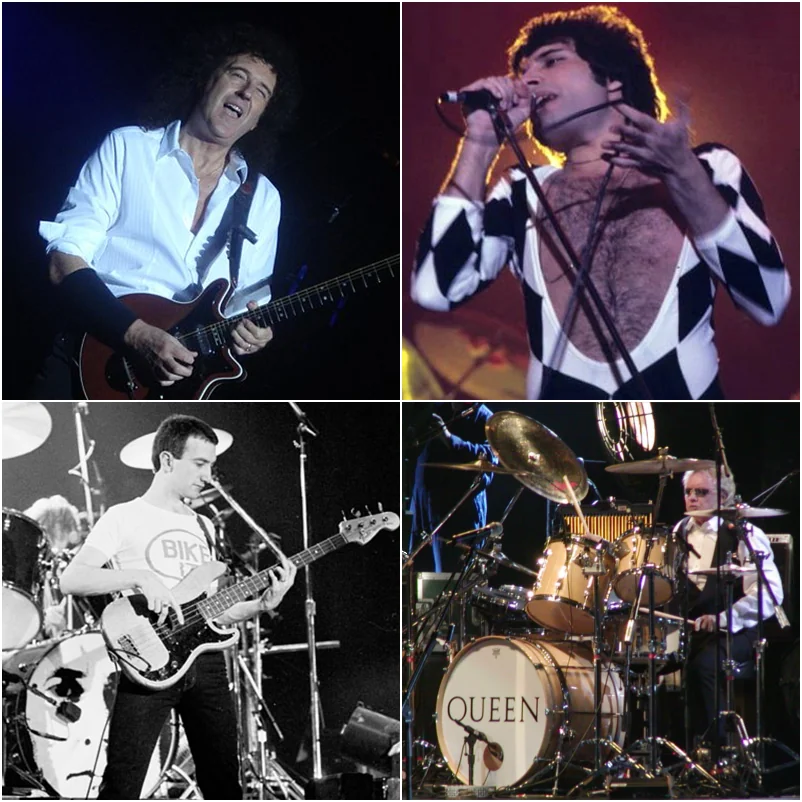
Image from Wikipedia
Image from Wikipedia
Queen – The Royal Power of Rock, Between Opera, Stadium Anthem, and Pop Genius
A Band That Not Only Made Rock History but Re-Composed It
Queen is one of the defining formations in pop and rock history. The British band, founded in 1970, combined virtuosic songwriting, spectacular stage presence, and stylistic boldness into a sound that remains instantly recognizable today. Freddie Mercury, Brian May, Roger Taylor, and John Deacon formed a lineup that remained unchanged for over two decades and created history as a cohesive creative unit.
From the beginning, it was clear that Queen was not an ordinary rock band. Their music ranged from hard rock to glam and pop, featuring operetta-like arrangements, harmonic choruses, and balladic drama. This very mixture facilitated their international breakthrough and made Queen a band whose discography includes not just hits, but cultural markers.
The Beginnings: From Idea to Identity
The origin of Queen lies in a time when British rock was reordering itself and contending with hard rock, progressive rock, and glam rock. From this mixture, the band developed a distinctive ambition early on: not just to write songs, but to create mini-dramas with grand melodies, sharp dynamics, and maximal staging. Even the band name reflected the theatrical gesture that Freddie Mercury would later elevate to an art form as the frontman.
The early years were characterized by a spirit of experimentation and attention to detail. With each album, the group refined their sound, with all four members significantly involved in songwriting. This collective strength became a crucial factor in Queen's artistic development, allowing for a rare blend of individuality and ensemble spirit.
The Breakthrough: When Queen Became a Global Brand
The international rise accelerated from 1974. After their breakthrough, Queen released a series of studio albums, each of which reached number one on the charts. By the time of "Bohemian Rhapsody," one of the most unusual singles in rock history, it was clear that Queen was ready to break the rules of the format. The fusion of ballad, operatic quotes, hard rock, and multi-layered studio architecture made the song a turning point in pop production.
The band developed an almost unprecedented series of hits from this success. "We Are the Champions," "We Will Rock You," "Another One Bites the Dust," "I Want to Break Free," "Radio Ga Ga," "A Kind of Magic," and "The Show Must Go On" exemplify a musical career that combines stadium-worthy choruses with compositional sophistication. Queen knew how to write songs that were both intellectually calculated and immediately emotionally accessible.
Freddie Mercury and the Art of the Grand Gesture
Freddie Mercury was the charismatic center of the band, yet Queen never relied solely on one figure. Mercury's voice, his theatrical performance, and his sense of melody made him one of rock's outstanding frontmen. At the same time, his contribution was closely tied to the compositional skills of the other members, particularly Brian May's melodic guitar work and John Deacon's rhythmically clear song architecture.
Mercury's songwriting was often characterized by maximum drama. "Bohemian Rhapsody" is the most famous example, but "We Are the Champions" and "The Show Must Go On" also showcase his ability to channel emotions into grand form. His stage presence gave the band an aura that extended far beyond mere music, making Queen synonymous with spectacular live performances.
The Songwriter Band: Four Personalities, One Sound
Queen stood out from many contemporaries due to the equal role of its members. Brian May provided anthems of elemental force with "We Will Rock You" and numerous other tracks, while Roger Taylor expanded the band's sound with a distinctive, often rhythmically impulsive perspective through "Radio Ga Ga" and "A Kind of Magic." John Deacon contributed songs like "Another One Bites the Dust" and "I Want to Break Free," which anchored Queen's success within the funk and pop spectrum.
This distribution of creative power ensured that their discography never felt monotonous. Instead, a catalog emerged that oscillated between brutal rock, fine harmonics, and catchy hooks. This is where the lasting appeal of Queen's artistic development lies: they remained open to mass success without giving up their compositional ambition.
Discography and Chart Success: A Catalog Full of Milestones
Queen is legendary not only because of individual songs but also due to an exceptionally successful album history. All studio albums after their breakthrough in 1974 reached number one on the charts. Additionally, the epochal significance of "Greatest Hits," which became the best-selling album of all time in the UK and one of the best-selling albums worldwide, cannot be overstated.
The band also set standards with their singles. "Bohemian Rhapsody" topped the British singles charts multiple times and is considered one of the defining pieces of pop history. "Another One Bites the Dust" became the best-selling Queen single, while "We Will Rock You" and "We Are the Champions" became permanently embedded in global sports and stadium culture. Few rock bands have transitioned from album culture to collective mass moments as seamlessly as Queen.
Style and Production: Between Hard Rock, Pop, and Musical Theater
The sound of Queen is the result of careful production and a profound love for arrangement. The band worked with complex vocal harmonies, distinct guitar lines, and striking dramatic dynamics. In many pieces, the interplay of rock band and stage orchestra can be heard, even when only a classic four-piece setup is playing.
Particularly noteworthy is Queen's ability to utilize stylistic contrasts not as contradictions but as a compositional principle. A ballad can shift to a hard rock finale, a pop song can suddenly gain operatic twists, and a guitar riff can become a collective chant. This openness is precisely what made Queen a band that has influenced generations of listeners, musicians, and producers.
Live Era and Stage Presence: Queen as a Stadium Event
Queen played over 700 concerts in 16 years, perfecting their role as a live giant. The band was not only strong in the studio but turned performances into emotional grand events. The combination of Mercury's charisma, May's guitar tone, and the collective precision of the rhythm section ensured concerts that left lasting memories.
This live dimension accounted for a large part of their global success. Queen was a band that did not just perform their songs but transformed them into collective experiences. The audience became an active part of the performance, giving rise to the legendary connection between the band and fans that continues to uphold Queen's status today.
Cultural Influence and Legacy
Queen has changed the perception of what rock music can achieve. Their songs have long since become part of the cultural memory, from sports arenas to films to advertising campaigns and karaoke cultures. "Bohemian Rhapsody" stands as a symbol for the idea that a pop song can be formally risky, theatrical, and yet widely appealing.
The cultural influence extends far beyond the musical core. Queen shaped the image of the rock star as a figure of spectacle, without neglecting the song itself. This balance of show, craft, and emotion continues to make the band a reference point for artists across various genres.
Current Projects, Reissues, and the Late Presence of an Eternal Band
Even decades after their greatest active phase, Queen remains present. In 2024, "Queen I," a lavishly reworked, remixed, remastered, and expanded version of their debut album, including additional mixes, demos, and live material, will be released. This release shows how carefully the band maintains their archive and how strong the interest in their early work remains.
Additionally, audiovisual projects such as "Queen Rock Montreal" in IMAX format carry the concert myth of the group into the present. In mid-2024, it was also announced that the rights to music, merchandise, and ancillary rights had been sold to Sony Music Publishing. This development underscores the enormous economic and cultural value of the Queen catalog.
Conclusion: Why Queen Still Electrifies Today
Queen fascinates because they have made opposites productive: intellect and instinct, theatricality and precision, mass success and musical individuality. Their discography contains anthems, boundary pushers, and masterpieces that transcend the classic rock format. Those who listen to Queen encounter a band that not only accompanies pop history but shapes it.
This mixture of artistic development, hit competency, and live magic continues to make Queen exciting today. Their songs are greater than their time and yet deeply rooted in it. Anyone who has the opportunity to experience Queen live in one of their later forms, on film, or in historical retrospection should seize it – for few bands have shaped the concept of stage presence as enduringly.
Official Channels of Queen:
- Instagram: https://www.instagram.com/officialqueenmusic/
- Facebook: https://www.facebook.com/Queen/
- YouTube: https://www.youtube.com/@QueenOfficial
- Spotify: No official profile found
- TikTok: https://www.tiktok.com/@queenofficial
Sources:
- Queen One Official – Official Website
- QueenOnline.com – About Queen
- Official Charts – Queen Chart History
- AllMusic – Queen Biography, Discography & Expert Reviews
- Linktree – Queen Official Social Links
- QueenOnline.com – QUEEN I, Remixed, Remastered and Expanded – Out Now!
- QueenOnline.com – Queen Rock Montreal in IMAX
- Wikipedia: Image and Text Source – Queen (Band)