
Lou Andreas-Salomé
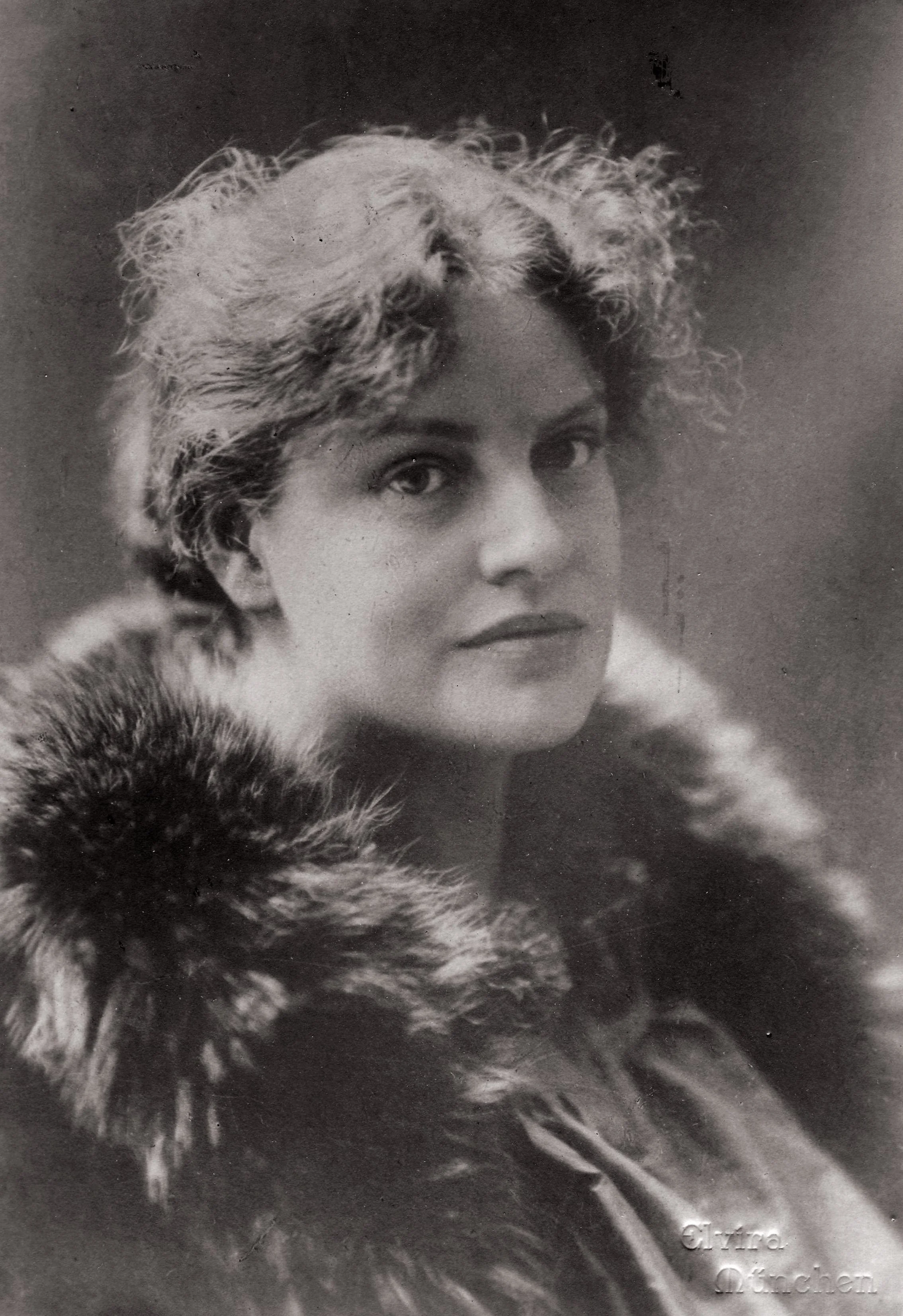
Image from Wikipedia
Image from Wikipedia
Lou Andreas-Salomé: The Intellectual between Freedom, Passion, and Modernity
An extraordinary author, thinker, and psychoanalyst of European intellectual history
Lou Andreas-Salomé, born Louise von Salomé on February 12, 1861, in St. Petersburg and died on February 5, 1937, in Göttingen, is considered one of the most remarkable intellectual figures of her time. She was a writer, storyteller, essayist, and psychoanalyst from a Russian-German family, and her works shaped the debates surrounding religion, philosophy, cultural studies, and modern subjectivity. Her life and work represent intellectual independence, artistic self-assertion, and a keen insight into the upheavals of modernity. ([deutsche-biographie.de](https://www.deutsche-biographie.de/118502921.html?language=en))
Background, Education, and the Early Break with Conventions
The family roots of Lou Andreas-Salomé were in a cosmopolitan environment: her father was of French Huguenot and German-Baltic descent and had a career in the Russian army, while her mother was of North German-Danish heritage. Early on, Lou fought for the permission and preparation to study, which was by no means a given in her lifetime. She studied religious history and philosophy in Zurich, where she developed the intellectual sovereignty that would define her later writing and thinking. ([deutsche-biographie.de](https://www.deutsche-biographie.de/118502921.html?language=en&utm_source=openai))
This early academic shaping was coupled with a restless, travel-loving biography that never confined Lou Andreas-Salomé to a single role. She moved between literary circles, philosophical debates, and personal independence, without permanently conforming to middle-class expectations. It is this tension between social norms and intellectual autonomy that makes her artistic personality so captivating to this day. ([deutsche-biographie.de](https://www.deutsche-biographie.de/118502921.html?language=en))
The Berlin Circle: Literary Breakthrough and Intellectual Networking
In Berlin, the circle emerged that made Lou Andreas-Salomé visible as an author and anchored her name in the cultural debates of the time. She lived there for a time with Paul Rée and moved within a milieu of scholars, writers, and thinkers, where she drew particular attention as the only woman. In 1885, her first novel Im Kampf um Gott was published under the pseudonym Henri Lou; the reviews were favorable, the pseudonym quickly uncovered, and the success earned her newfound recognition in Berlin society. ([de.wikipedia.org](https://de.wikipedia.org/wiki/Lou_Andreas-Salom%C3%A9))
This early literary presence was not an isolated success but the beginning of a long, productive career as an essayistic and narrative author. Lou Andreas-Salomé combined observational talent, philosophical reflection, and psychological sensitivity into her own voice. Her texts revolved around questions of faith, cultural tensions, and inner development—topics that later significantly engaged the history of literature and psychoanalysis. ([de.wikipedia.org](https://de.wikipedia.org/wiki/Lou_Andreas-Salom%C3%A9))
Nietzsche, Rilke, Freud: Encounters that Shaped History
Lou Andreas-Salomé became significant not only through her books but also through her relationships with the central intellectual figures of her era. Through Paul Rée, she met Friedrich Nietzsche; later, her connection with Rainer Maria Rilke proved particularly consequential, even for his literary development. In 1911, she first came into closer contact with Sigmund Freud at a psychoanalytic congress in Weimar, whose work she then deepened and reflected in her own creations. ([deutsche-biographie.de](https://www.deutsche-biographie.de/118502921.html?language=en&utm_source=openai))
These encounters were not mere biographical episodes but productive junctions of an intellectual networking career. Lou Andreas-Salomé contributed to the intellectual upheavals of the time by not only radiating inspiration but also analyzing, interpreting, and writing herself. Her work encompasses studies on Ibsen, Nietzsche, Rilke, and Freud, as well as novels, stories, essays, theater critiques, autobiographical writings, and psychoanalytical texts. ([de.wikipedia.org](https://de.wikipedia.org/wiki/Lou_Andreas-Salom%C3%A9))
Literary Work: In-Between Landscapes of the Soul
Lou Andreas-Salomé's literary distinctiveness particularly manifested itself in texts that address inner transitions, maturation, and psychological development. The Neue Deutsche Biographie lists among her works H. Ibsens Frauengestalten (1892), F. Nietzsche in seinen Werken (1894), Ruth (1895), Im Zwischenland (1902), Die Stunde ohne Gott und andere Kindergeschichten (1922), R. M. Rilke (1928), and Mein Dank an Freud (1931). Even this selection shows the thematic range between literary criticism, narrative, psychology, and cultural self-interpretation. ([deutsche-biographie.de](https://www.deutsche-biographie.de/118502921.html?language=en&utm_source=openai))
Her texts are characterized by analytical precision and concentrated observation of human relationships. Lou Andreas-Salomé was interested in border spaces: faith and doubt, youth and growing up, attachment and freedom, self-assertion and dependency. Thus, she became an author whose language focused less on ornamentation and more on intellectual sharpness and emotional depth. ([deutsche-biographie.de](https://www.deutsche-biographie.de/118502921.html?language=en))
Psychology and Psychoanalysis: The Late, Decisive Turn
A crucial phase in Lou Andreas-Salomé's biography began with her turn towards psychoanalysis. In 1912, she stayed in Vienna for what she called her psychoanalytic study year and practiced psychoanalytical healing during and after World War I in Göttingen. This further shifted her profile from merely being a literary author to becoming a reflective analyst of modern humanity. ([deutsche-biographie.de](https://www.deutsche-biographie.de/118502921.html?language=en&utm_source=openai))
Her work in this field appears in retrospect as a logical continuation of her overall work. For Lou Andreas-Salomé had already intertwined language, experience, and psychological development in her texts before. Her psychoanalytical activity lends her biography an additional authority, making her a key figure of the time when literature and depth psychology were closely interwoven. ([deutsche-biographie.de](https://www.deutsche-biographie.de/118502921.html?language=en))
Style, Themes, and Cultural Influence
Lou Andreas-Salomé's cultural influence extends far beyond the boundaries of a single discipline. The Deutsche Biographie emphasizes her personal charisma, her education, her intellectual versatility, and her unconventional lifestyle as reasons for her firm place in German cultural history. At the same time, the entry notes that her own literary work took a long time to catch up with the extraordinary story of her life, even though she was actively involved in modernity around 1900. ([de.wikipedia.org](https://de.wikipedia.org/wiki/Lou_Andreas-Salom%C3%A9))
Particularly noteworthy is how consistently she processed central questions of her time: the emancipation of women, life reform, monism, reform pedagogy, early sociology, and psychoanalysis. Her writing is thus not only literarily relevant but also culturally and historically significant. Lou Andreas-Salomé demonstrates how a single life can become a resonating space for an entire era. ([de.wikipedia.org](https://de.wikipedia.org/wiki/Lou_Andreas-Salom%C3%A9))
Reception, Legacy, and Literary Presence to This Day
Her posthumous fame is closely tied to biographies, novel literature, musical theater, and plays. Wikipedia specifically points to Giuseppe Sinopoli's opera Lou Salomé, which premiered in Munich in 1981, as well as the play Being Lou Andreas-Salomé, which will premiere in Göttingen in 2026. This shows that her life and thought continue to inspire artistic adaptations and remain alive in cultural memory. ([de.wikipedia.org](https://de.wikipedia.org/wiki/Lou_Andreas-Salom%C3%A9))
Institutionally, her influence has also remained visible: In Göttingen, a commemorative plaque, a Lou-Andreas-Salomé path, and the Lou Andreas-Salomé Institute for Psychoanalysis and Psychotherapy pay tribute to her. Such places of remembrance underline that her intellectual presence is not confined to libraries but lives on in public spaces and academic contexts. ([de.wikipedia.org](https://de.wikipedia.org/wiki/Lou_Andreas-Salom%C3%A9))
Current Projects and Publications
Lou Andreas-Salomé is a historical figure; therefore, there are no current projects, tours, album releases, or new artistic releases in today's sense. The current presence of her name instead arises through reprints, scholarly editions, theatrical adaptations, and cultural historical research. This ongoing reception keeps her work in conversation and shows how significantly her intellectual legacy continues to impact the present. ([de.wikipedia.org](https://de.wikipedia.org/wiki/Lou_Andreas-Salom%C3%A9))
Conclusion: Why Lou Andreas-Salomé Continues to Fascinate
Lou Andreas-Salomé remains intriguing because she connected thinking, writing, and living in a rare way. She was not a peripheral figure in the biographies of famous men but an independent author who asserted herself with extraordinary clarity in literature, philosophy, and psychoanalysis. Engaging with her means encountering a personality that embodied spirit, style, and independence in a manner that continues to inspire today. ([de.wikipedia.org](https://de.wikipedia.org/wiki/Lou_Andreas-Salom%C3%A9))
Her blend of intellectual radicalism, emotional complexity, and cultural foresight makes her a lasting figure of modernity. Reading Lou Andreas-Salomé means rediscovering one of the sharpest voices of her time. Her works and the continued artistic reception invite us to continually experience her life’s work afresh. ([de.wikipedia.org](https://de.wikipedia.org/wiki/Lou_Andreas-Salom%C3%A9))
Official Channels of Lou Andreas-Salomé:
- Instagram: No official profile found
- Facebook: No official profile found
- YouTube: No official profile found
- Spotify: No official profile found
- TikTok: No official profile found