
Bundesliga Sport with Open Entry
Roller Derby in Karlsruhe: Why the RocKArollers Inspire So Many
Speed like in ice hockey, tactics like in team sports in a confined space – and body contact that only works because it is precisely regulated: Roller Derby may seem rough at first glance, but above all it is a disciplined interplay of technique, rules, and teamwork. In Karlsruhe, the RocKArollers have stood for this since 2010. They are anchored in SSC Karlsruhe, compete with a women's team in the Bundesliga, and still deliberately keep entry open – even for people who are still unsteady on roller skates at the beginning.
What Makes Roller Derby Special with the RocKArollers
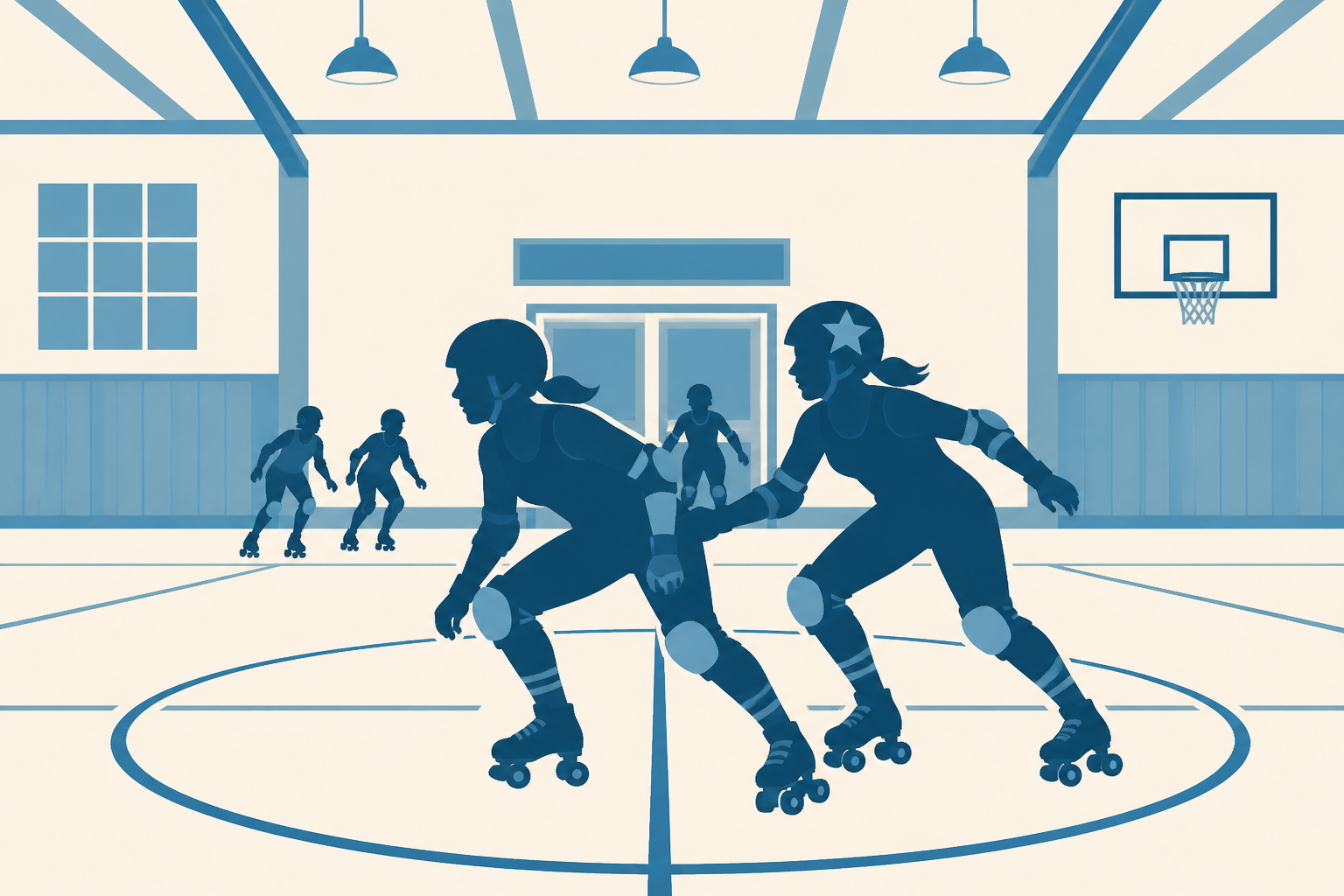
The game is played on an oval track counterclockwise, in two halves of 30 minutes each. The decisive phases of the game are called "jams" and last a maximum of two minutes. Each team has five players on the track: one jammer, who can score points, and four blockers, who direct the game – by opening spaces, slowing down opponents, and positioning their own jammer.
Points are scored when the jammer laps the opposing field. What sounds like "just being faster" is actually a constant struggle for lines, speed, and timing: blockers build formations, close gaps, shift the "pack," and try to push the opposing jammer into unfavorable angles. Conversely, your own jammer needs not only acceleration and endurance, but also the instinct for when to break off an attack, when a sprint is worthwhile – and when to accept contact instead of dodging it.
The fact that Roller Derby is considered a full-contact sport does not mean "everything is allowed"; on the contrary: body contact is tightly regulated. Checks with the hip or shoulder are allowed. Contacts to the legs or back, as well as attacks with the head first, are among those prohibited. These clear boundaries separate athletic contact from dangerous risk. Helmet, mouthguard, and pads are therefore part of the basic equipment – not as a symbol of toughness, but as a prerequisite for the sport to be played at this level at all.
The physical demands are also special: those who block must stand firmly, accelerate quickly, keep an eye on the rules, and react to sudden changes of direction. Training therefore includes not only skating technique, but also controlled falling and getting up – because falls happen. Helena sums it up succinctly: "We do fall quite often."
Bundesliga Team and Entry for Beginners
The RocKArollers combine two things that are often separate in many sports: performance-oriented competition and a clear entry path. The Bundesliga women's team demonstrates the athletic ambition. At the same time, there is a newbie training in which basically anyone can participate – even without prior experience on roller skates.
Newbie training is therefore not just about "first laps," but about fundamentals that later become crucial in the game: safe braking, stable stance in contact, visual awareness, understanding of the rules – and how to fall correctly. Up to a year of training may be necessary before the first match. This time is less a hurdle than a safety concept: those who later have to decide in a split second during a jam whether a contact is legal, where the pack is, and how to block without risk, need automatisms. These only develop through repeated, structured training.
Why the Community Is So Important
Besides the sport, the culture of the scene shapes the image of the RocKArollers – and explains why many stay, even though starting out is demanding. Helena describes exactly this pull: "For me, it was really great to start with Roller Derby, simply because it's a wonderful community." In a sport where trust on the track is central, cohesion becomes practical: you learn together, protect each other through clean technique, and take responsibility – as a player, as an official, in training, and in the environment.
Derby culture also includes alias names and a unique style. In Karlsruhe, players compete under names like Effi Biest, Iris Ponsible, DynaMeid, or Natural. Desiree, who plays as Robin Graves, recalls: "In the past, people used to dress up." Glitter or face paint today are often just a detail – as a visible reminder that Roller Derby historically also thrived on DIY aesthetics and self-staging, without diluting the athletic core.
This mix is Karlsruhe's trademark: Roller Derby as a serious, rule-based full-contact sport – and at the same time as a team culture that welcomes new people. Those who watch don't just see collisions and speed, but a system of tactics, discipline, and mutual support. That is exactly what excites so many in Karlsruhe.
Frequently Asked Questions
Sources
- https://www.swr.de/swraktuell/baden-wuerttemberg/karlsruhe/football-auf-rollschuhen-roller-derby-frauen-bundesliga-100.html, Herrenberg nach Nagold Neue Geburtsklinik eingeweiht
- https://rockarollers.de