
Luise Büchner
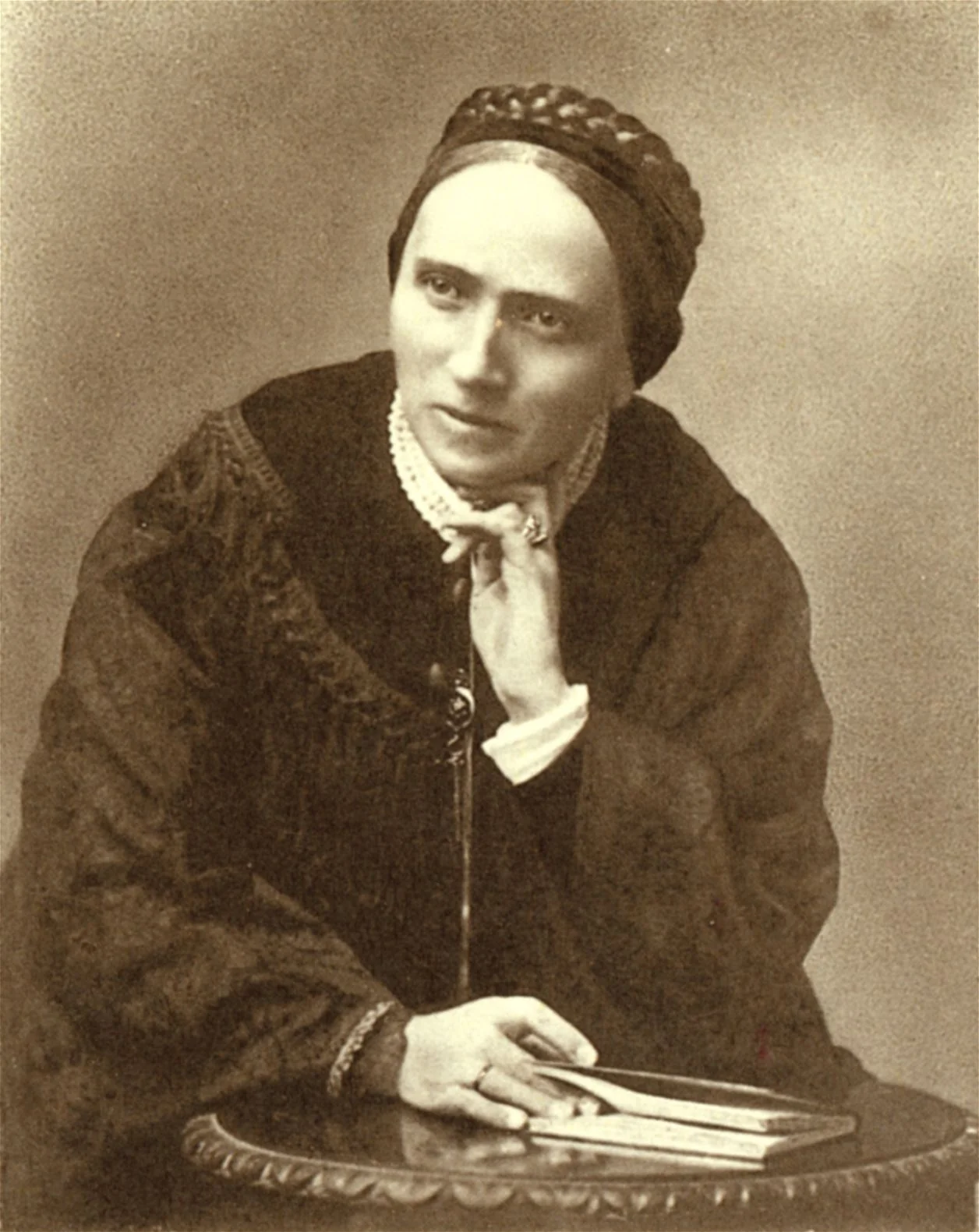
Image from Wikipedia
Image from Wikipedia
Luise Büchner – the uncompromising voice of women's education and women's rights
An author, reformer, and early thinker of the women's movement from Darmstadt
Luise Büchner is one of the defining German feminists of the 19th century. Born on June 12, 1821, in Darmstadt and passing away there in 1877, she intertwined literary work with social engagement, addressing the issues of women's education, careers, and self-determination with extraordinary clarity. Her name remains synonymous with enlightenment, journalism, and institutional reform in an era when female voices were rarely heard in the public sphere. ([de.wikipedia.org](https://de.wikipedia.org/wiki/Luise_B%C3%BCchner))
Biography: Education as a personal motivation and political program
An accident in early childhood resulted in a spinal deformity for Luise Büchner, which affected her throughout her life. Nevertheless, she became self-taught to an extraordinary level of education, acquiring knowledge in literature, mythology, history, and foreign languages. From the age of eight to fourteen, she attended a girls' boarding school in Offenbach; after the death of her parents, she lived with her sister Mathilde in their own household in Darmstadt. This biographical context sharpened her awareness of the limitations on women's life choices in the 19th century. ([de.wikipedia.org](https://de.wikipedia.org/wiki/Luise_B%C3%BCchner))
Her background from the Büchner family in Darmstadt shaped the intellectual environment in which she operated. Her siblings included Georg, Ludwig, and Alexander Büchner; the family was intellectually productive and anchored in the educated bourgeoisie. Luise Büchner used these conditions not for retreat but for public engagement: she became an author who put her knowledge in service of a social and political idea. This is a significant part of her historical importance. ([de.wikipedia.org](https://de.wikipedia.org/wiki/Luise_B%C3%BCchner))
Literary breakthrough: The Women and Their Work as a key text
In 1855, Luise Büchner anonymously published her most quoted work The Women and Their Work, which advocated for better education for girls. By 1856, an expanded second edition with her name as the author was released, and later revisions reflected her experiences in the women's movement. The book made it clear that women's education was not a marginal topic for her, but rather the core of societal modernization. Her writing combined argumentation, moral urgency, and a precise understanding of social reality. ([de.wikipedia.org](https://de.wikipedia.org/wiki/Luise_B%C3%BCchner))
The title is more than a programmatic text; it marks an early, systematic contribution to the debate about female career biographies and educational opportunities. Luise Büchner wrote not only about women but from the perspective of an author who was acutely aware of the limitations of the prevailing system. This is why her journalism was so compelling: she articulated not an abstract ideal but a concrete agenda for social reform. This approach was groundbreaking for the women's movement of the 19th century. ([de.wikipedia.org](https://de.wikipedia.org/wiki/Luise_B%C3%BCchner))
Career and impact: From salon to institution
Beginning in 1860, Luise Büchner offered history lectures for girls and women in her home. In 1870, she co-founded the Alice Lyceum, a community college for women, where renowned scholars delivered lectures in the humanities and natural sciences. This moved education from the private sphere into a semi-public, structured framework, creating tangible access to knowledge. Her career as a women's rights advocate consisted not only of texts but also of institutional building work. ([luise-buechner-gesellschaft.de](https://www.luise-buechner-gesellschaft.de/2015/11/05/luise-buechner/))
Alongside Grand Duchess Alice of Hesse and by Rhine, Luise Büchner became a central figure in the Darmstadt women's association movement. From this collaboration, multiple women's associations emerged from 1867 onward, including the Alice Women's Association for Nursing and the Association for the Promotion of Female Industry. These initiatives focused on paid women's work, qualified training, and the professionalization of nursing. Büchner linked education, career, and social recognition into a program that was remarkably modern for its time. ([de.wikipedia.org](https://de.wikipedia.org/wiki/Luise_B%C3%BCchner))
Public authority: The first woman with a consultancy assignment from the Ministry of Education
In the 1870s, Luise Büchner represented the Alice Women's Associations at regional conferences and regularly reported in the press on their work. In 1872, at her initiative and that of Princess Alice, the first general assembly of women's education and employment associations took place in Darmstadt. In 1873, the Prussian Ministry of Education appointed her as the first woman to provide input on teaching and educational issues regarding girls' schooling. This recognition not only documents her reputation but also her professional authority in educational matters. ([de.wikipedia.org](https://de.wikipedia.org/wiki/Luise_B%C3%BCchner))
The positions she advocated were clear: broad education for girls through trained female teachers, fair pay for women's work, professionalization of nursing, and educational opportunities for neglected women. It is precisely this combination of analysis and reform proposals that makes her writings still relevant today. Luise Büchner did not argue sentimentally but structurally; she thought in social systems, not in mere appeals. For the history of the women's movement, this represented a sustainable shift. ([fembio.org](https://www.fembio.org/biographie.php/frau/biographie_extra/luise-buechner/))
Works and range of publications
In addition to The Women and Their Work, Luise Büchner's oeuvre includes Poetic Voices from Home and Abroad (1859), Women's Heart. Poems (1862), the novel The Castle at Wimmis (1864), Female Considerations on a Female Topic (1868), On Female Professions (1871), Clara Dettin. A Narrative Poem (1874), and German History from 1815 to 1870 (1875). After her death, The Woman. Posthumous Essays, Treatises, and Reports on the Women's Issue and Posthumous Literary and Miscellaneous Works were published. The spectrum shows an author who mastered essay, poetry, novel, and lecture equally. ([luise-buechner-gesellschaft.de](https://www.luise-buechner-gesellschaft.de/2015/11/05/luise-buechner/))
This combination of literary and argumentative writing is particularly interesting. Luise Büchner did not work with a single genre but utilized different forms to reach various audiences. This is precisely how her work gained breadth: the poetic tone opened emotional spaces, while the essays and lectures substantiated reforms. The true strength of her journalistic career lies in this connection. ([luise-buechner-gesellschaft.de](https://www.luise-buechner-gesellschaft.de/2015/11/05/luise-buechner/))
Cultural impact: Remembrance, honors, and legacy
Today, Luise Büchner is regarded alongside Luise Otto and Fanny Lewald as one of the groundbreaking women of the 19th-century German women’s movement. Her memory is visible in Darmstadt: the Luise Büchner Library at the Literature House, an education campus, and a bronze monument are named after her. The Luise Büchner Society, founded in 2010, keeps her work alive and awards the Luise Büchner Prize for journalism in the tradition of critical journalism. These forms of remembrance show how lasting her impact on education and public life has remained. ([de.wikipedia.org](https://de.wikipedia.org/wiki/Luise_B%C3%BCchner))
Scientific and cultural discussions continue to engage with her legacy. In 2022, the FAZ reported on the musical adaptation of Luise Büchner's life and work by the State Theatre Darmstadt in the musical Becoming Luise Büchner. The fact that an arts house is dedicating itself to her figure underscores the ongoing relevance of her thinking: Luise Büchner represents not a closed chapter but an ongoing dialogue about education, participation, and female self-determination. ([faz.net](https://www.faz.net/aktuell/rhein-main/kultur/becoming-luise-buechner-revue-am-staatstheater-darmstadt-18474862.html))
Conclusion: Why Luise Büchner remains relevant today
Luise Büchner fascinates because she connected literature, a reformist spirit, and institutional practice in a rare way. She wrote not just about women but worked on the conditions under which women could read, learn, work, and speak publicly. Her life illustrates how personal education can lead to political action and how journalism can bring about concrete change. Anyone interested in the history of the women’s movement, German cultural history, and the power of the written word will find in her an impressively modern personality. ([de.wikipedia.org](https://de.wikipedia.org/wiki/Luise_B%C3%BCchner))
For this reason, engaging with Luise Büchner remains worthwhile time and again: as an author, as a networker, as a public thinker, and as an early architect of female educational spaces. Her writings and initiatives demonstrate that cultural change rarely begins loudly but works deeply. Those who wish to understand her legacy should not only read the historical texts but also visit the places where her memory continues to live on. ([de.wikipedia.org](https://de.wikipedia.org/wiki/Luise_B%C3%BCchner))
Official channels of Luise Büchner:
- Instagram: No official profile found
- Facebook: No official profile found
- YouTube: No official profile found
- Spotify: No official profile found
- TikTok: No official profile found