
Hugo Harrer
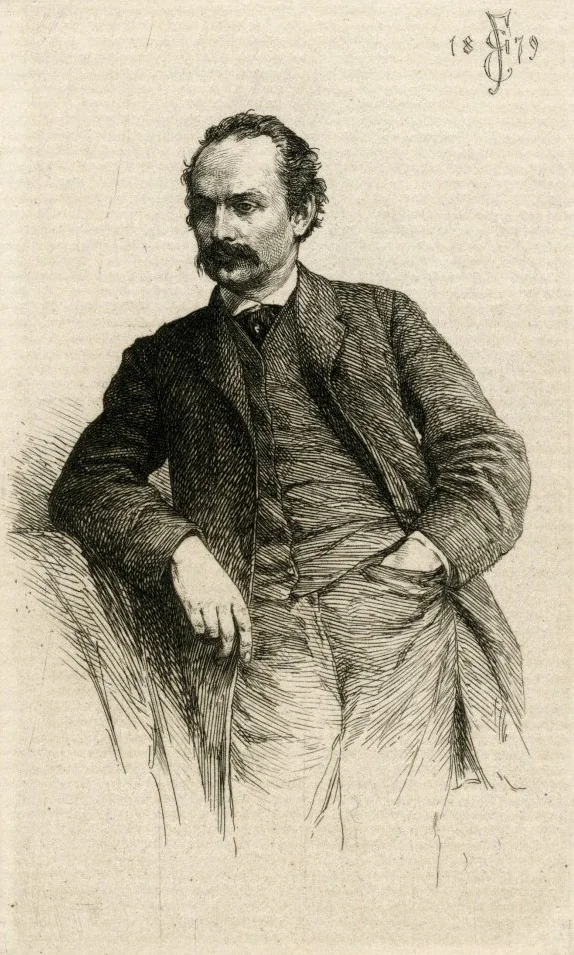
Image from Wikipedia
Image from Wikipedia
Hugo Harrer – Rome, Ruins, and the Poetic Precision of the Düsseldorf School
A Painter Between Architectural Perspective and Italian Light
Hugo Paul Harrer (* February 6, 1836 in Eberswalde; † December 10, 1876 in Rome) is one of those 19th-century artists whose work impressively captures the tension between precise observation of nature and atmospheric poetic imagery. As a German landscape and architectural painter of the Düsseldorf School, he developed a visual language that drew its strength from study trips, experiences in Rome, and a focus on historical urban landscapes. His career tells the story of an artist who shaped his academic path not linearly, but rather independently and autodidactically. ([de.wikipedia.org](https://de.wikipedia.org/wiki/Hugo_Harrer?utm_source=openai))
Biographical Roots: From Architecture Studies to Painting
According to the preserved biographical sources, Harrer began with architectural training but soon turned to painting. This decision characterized his entire artistic demeanor: Rather than permanently attaching himself to an academy, he initially educated himself, observed nature with great care, and sought exchange in the studios of friends. It is precisely this combination of constructive thinking and free painterly practice that explains why his paintings often combine a clear spatial order with strong mood. ([deutsche-biographie.de](https://www.deutsche-biographie.de/sfz26126.html?language=de&utm_source=openai))
His first paintings were created in Nuremberg, where the architecture inspired him to early attempts at architectural painting. He then moved to Munich, where he oriented himself towards the works of Carl Theodor von Piloty, before traveling to Rome in 1861 or 1862. He lived there permanently but later interrupted his stay for an important study phase in Düsseldorf. These stages do not mark a linear academic career; rather, they reflect an artistic movement between southern German education, Italian experience, and Rhineland painting tradition. ([de.wikipedia.org](https://de.wikipedia.org/wiki/Hugo_Harrer?utm_source=openai))
Rome as a Space of Life and Imagery
Rome became for Harrer not just a place of residence, but an aesthetic center. From there, he undertook numerous excursions, collected studies and sketches, and used them as a basis for oil paintings that he submitted to German art exhibitions. The motifs ranged from street scenes and ruins to Italian coastal landscapes; it is precisely this thematic range that holds the charm of his oeuvre. Harrer sought not spectacle but the poetically condensed impression of the place. ([deutsche-biographie.de](https://www.deutsche-biographie.de/sfz26126.html?language=en&utm_source=openai))
Particularly remarkable is how much his painting relies on immediate observation. Sources emphasize his "sense of truth" and the most careful observation of nature, while also noting his preference for architectural and topographical motifs. In his Roman-influenced images, light, stone, path, and horizon merge into a quietly dramatic space that offers the viewer an almost narrative experience. This closely resembles the Düsseldorf School: in the pictorial construction of the image space and in the concentration on mood and detail. ([deutsche-biographie.de](https://www.deutsche-biographie.de/sfz26126.html?language=de&utm_source=openai))
The Düsseldorf School and the Formative Years of 1867/68
In 1867/68, Harrer was in Düsseldorf and studied in the landscape class of Oswald Achenbach at the Academy of Arts. This phase is historically central because Achenbach's teaching method combined nature study, light management, and colorful effects to create an international benchmark for landscape painting. During this time, Harrer evidently benefited from a school that focused less on rigid dogmas and more on observation, composition, and atmospheric coherence. ([stiftung-volmer.de](https://www.stiftung-volmer.de/artist/321?utm_source=openai))
The Düsseldorf School itself was not a uniform style but a widely branched artistic milieu with significant impulses for German and European painting. In this environment, landscape, architecture, and narrative scenery found special appreciation. Harrer's work thus stands at a crossroads: between romantic longing, realistic observation of places, and a bourgeois understanding of art that perceived the exhibition space as a stage for world travels in imagery. ([de.wikipedia.org](https://de.wikipedia.org/wiki/Liste_von_Malern_der_D%C3%BCsseldorfer_Malerschule?utm_source=openai))
Character of the Work: Architectural Painting, Landscape, and the Italian Coast
The documented descriptions of his art primarily mention painterly representations of street scenes, ruins, and Italian coastal landscapes. Additionally, there are architectural views that arise from his early studies and his preference for building forms. Harrer's paintings gain their tension from the combination of precise construction and painterly openness; they do not depict places merely as views but as stages of a quiet, contemplative experience. ([de.wikipedia.org](https://de.wikipedia.org/wiki/Hugo_Harrer?utm_source=openai))
A work such as the view of the Amalfi Coast, documented in auction and collection contexts, points to the typical orientation of his creation: southern light, coastal space, atmospheric openness. That such works still appear in collections, catalogs, and exhibition notices today underscores Harrer's status as an artist whose images stand at the intersection of art historical specialty and museum rediscovery. His painting is thus characterized less by iconic fame and more by its quality-driven consistency. ([dorotheum.com](https://www.dorotheum.com/en/l/5392782/?utm_source=openai))
Exhibitions, Reception, and Art Historical Placement
According to sources, Harrer regularly sent larger paintings to German art exhibitions. Contemporary reference works and art historical bibliographies already list his name in the context of such presentations, proving that he participated in the exhibition activities of the 19th century. Later collection and exhibition notes, such as those in Gera or within art historical collections, also show that his work remained in circulation and was perceived not only in the studio but also within the public art system. ([deutsche-biographie.de](https://www.deutsche-biographie.de/sfz26126.html?language=en&utm_source=openai))
The critical reception describes him as a competent painter who achieved an independent result without enduring ties to an academy or master studio. This assessment is important because it illustrates Harrer as a representative of a productive intermediary position: neither a strictly academic system artist nor a radical outsider, but a self-determined creator with a keen eye for nature and architecture. This precisely is what adds to his appeal today. ([deutsche-biographie.de](https://www.deutsche-biographie.de/sfz26126.html?language=en&utm_source=openai))
Style, Technique, and Artistic Development
Harrer's artistic development can be described as an approach combining drawing, study practice, and painterly synthesis. For him, architecture was not a cold subject; rather, it became a carrier of atmosphere, perspective, and historical memory. His compositions follow a clear order, yet color and light open the space for emotional depth. ([de.wikipedia.org](https://de.wikipedia.org/wiki/Hugo_Harrer?utm_source=openai))
In the tradition of the Düsseldorf landscape painting, nature is never merely a backdrop in Harrer's work. It is observed, composed, and transformed into a visual context that connects the documentary with the poetic. It is this very balance that made painting in the 19th century accessible to an audience that wanted to recognize places while also experiencing them idealistically. Harrer's paintings meet this demand with quiet precision. ([rheinische-geschichte.lvr.de](https://www.rheinische-geschichte.lvr.de/Epochen-und-Themen/Themen/die-duesseldorfer-malerschule-im-19.-jahrhundert/DE-2086/lido/57d1295fefdcc4.18641232?utm_source=openai))
Cultural Influence and Contemporary Significance
Although Hugo Harrer is not a name in the broad canon today, his work holds cultural historical value. He represents a generation of painters who understood Italy not as an exotic faraway land but as a place of artistic concentration. His paintings thus document not only places but also a European geography of longing in the 19th century, where Rome, Nuremberg, Munich, and Düsseldorf were artistically interconnected. ([deutsche-biographie.de](https://www.deutsche-biographie.de/sfz26126.html?language=en&utm_source=openai))
His biography also shows how significantly individuality and self-study could influence artistic production during that time. The blend of architectural thinking, nature study, and international experience makes Harrer an interesting example of the openness of the Düsseldorf School. Those who examine his works discover not a loud avant-garde but the quiet authority of a painter who systematically arranged spaces, light, and memory. ([deutsche-biographie.de](https://www.deutsche-biographie.de/sfz26126.html?language=en&utm_source=openai))
Conclusion: A Quiet Master of Image Atmosphere
Hugo Harrer captivates through the connection of architectural perspective, Italian landscape experience, and the sensitive image culture of the Düsseldorf School. His art thrives on observation, structure, and mood; it is precisely therein that its lasting quality lies. Anyone interested in 19th-century landscape painting, images of Rome, and substantial art historical marginal figures will find Harrer to be a remarkable artist. Experiencing him live in an exhibition or a museum presentation means rediscovering the quiet power of a precise, poetic gaze. ([deutsche-biographie.de](https://www.deutsche-biographie.de/sfz26126.html?language=en&utm_source=openai))
Official Channels of Hugo Harrer:
- Instagram: No official profile found
- Facebook: No official profile found
- YouTube: No official profile found
- Spotify: No official profile found
- TikTok: No official profile found
Sources:
- Wikipedia – Hugo Harrer
- German Biography – Harrer, Hugo
- Foundation Volmer Collection – Harrer, Hugo Paul
- Rhineland History Portal – The Düsseldorf School in the 19th Century
- Gera Art Collection – Collection
- Dorotheum – Hugo Paul Harrer, 19th Century Paintings and Watercolours
- MAGEDA – Harrer, Hugo Paul (1836–1876)