Georg Tuxhorn
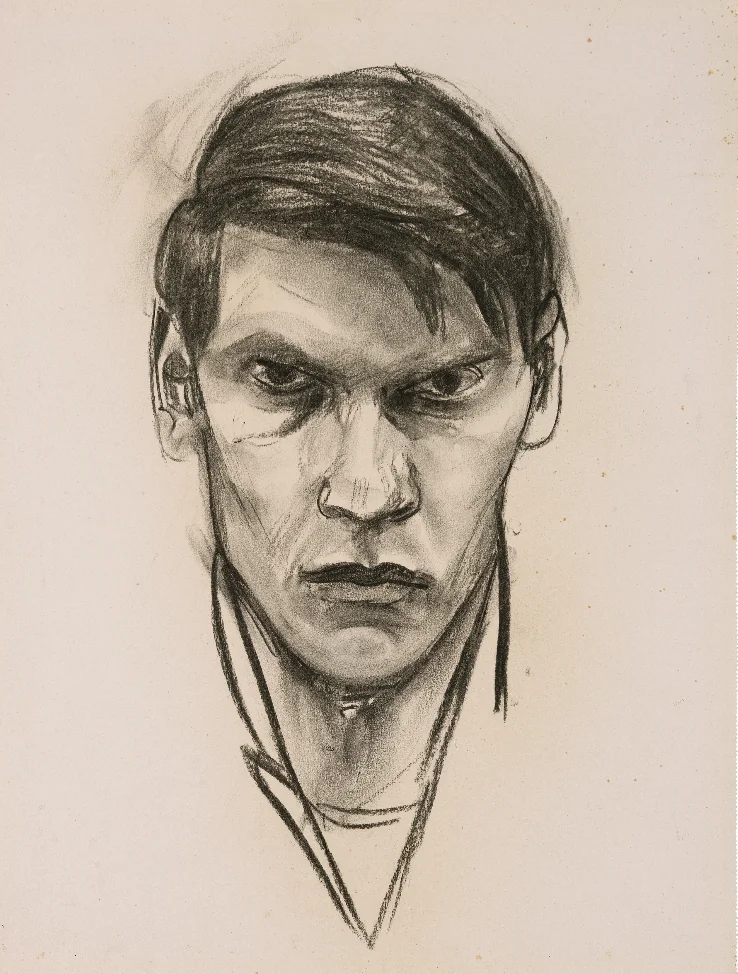
Image from Wikipedia
Image from Wikipedia
Georg Tuxhorn – The Quiet Modernist from Bielefeld
An Artist Between New Beginnings, Reduction, and Westphalian Modernism
Georg Tuxhorn is one of those names in German art history that does not stand in the spotlight and precisely for that reason evokes a unique fascination. Born in 1903 in Bielefeld and dying in his hometown in 1941, this painter is associated with the “Bielefeld Modernism,” a regional artistic context that developed its own language between new beginnings, independence, and classical modernism. His work represents a sober, concentrated visual conception formed through education at renowned art schools and engagement with the modern painting of his time. ([de.wikipedia.org](https://de.wikipedia.org/wiki/Georg_Tuxhorn?utm_source=openai))
Tuxhorn's artistic biography is closely tied to Bielefeld, Westphalia, and his educational stages in Dresden and Düsseldorf. Early on, he revealed his affinity for a soberly restrained modernism that did not tip color, form, and composition into expressive exaggeration but rather focused on clarity and inner tension. Today, he is viewed as an important representative of a second generation of Bielefeld Modernism, whose work is being reinterpreted in the tension between regional roots and art-historical development. ([bielefeld.jetzt](https://www.bielefeld.jetzt/node/2045209?utm_source=openai))
Origins and Early Years in Bielefeld
Georg Tuxhorn was born on May 8, 1903, as the youngest son of the trained lathe operator Adolf Tuxhorn and his wife Emma Tuxhorn. Growing up in Bielefeld, he found his way into art early on, attending the city's crafts and decorative arts school starting in 1919. This early educational influence formed the foundation for a career that was not oriented towards fashion but rather towards craftsmanship, careful observation, and a consistent stylistic development. ([de.wikipedia.org](https://de.wikipedia.org/wiki/Georg_Tuxhorn?utm_source=openai))
The Bielefeld art scene of the early Weimar years was characterized by movement, ambition, and the desire to connect with modernism. Tuxhorn entered this environment as regional artists began to formulate new visual worlds and question the classical academic tradition. His later standing as an independent painter is also based on this early anchoring in a milieu that combined local identity with artistic experimentation. ([stadtarchiv-bielefeld.de](https://www.stadtarchiv-bielefeld.de/Portals/0/PDFs/LgB%20digital/RB/RAvBll_2016_2.pdf?utm_source=openai))
Education in Dresden and Düsseldorf
In 1921, Tuxhorn transitioned to the Art Academy in Dresden, later moving on to Düsseldorf. These academic stages expanded his repertoire and brought him into contact with the currents that were decisive in German art during the interwar period. The education he received from different teachers and in various art centers sharpened his sensitivity to composition, pictorial space, and painterly condensation. ([lwl.org](https://www.lwl.org/pressemitteilungen/nr_mitteilung.php?urlID=57676&utm_source=openai))
Particularly, his connection to Dresden is of art-historical significance, as Tuxhorn moved in an atmosphere marked by engagement with modernity and its consequences. The line from his Bielefeld origins through academic shaping to his own visual language explains why he was later perceived as an independent representative of Westphalian modernism. It is not the grand gesture, but the controlled concentration that defines his approach to painting. ([lwl.org](https://www.lwl.org/pressemitteilungen/nr_mitteilung.php?urlID=57676&utm_source=openai))
The Breakthrough: Back in Bielefeld and First Exhibitions
In 1923, Georg Tuxhorn returned to Bielefeld. Just a year later, he held his first solo exhibition at the Otto Fischer Gallery, an important step for a young artist who needed to establish himself in the local art scene. Such early presentations are more than mere stops; they mark the moment when training and searching turn into a recognizable artistic profile. ([de.wikipedia.org](https://de.wikipedia.org/wiki/Georg_Tuxhorn?utm_source=openai))
From 1924 onwards, Tuxhorn was able to exhibit numerous times in Westphalia, thereby introducing his work into a broader public resonance space. Sources from regional art research describe him as an independent and successful artist of the Bielefeld Modern, whose development did not take place in isolation but became visible within a network of local exhibition culture. This led to a career oscillating between studio work and public perception, between regional significance and art-historical classification. ([stadtarchiv-bielefeld.de](https://www.stadtarchiv-bielefeld.de/Portals/0/PDFs/LgB%20digital/RB/RAvBll_2016_2.pdf?utm_source=openai))
Style, Visual Language, and Artistic Development
Tuxhorn's style is described in research as an expression of an objectified, sober mode of representation. The LWL Museum highlights a clear visual conception in the painting “Baltin,” where emotions are consciously subdued. The quality of his painting lies precisely in this: he condenses motives into quiet, precisely composed images, in which the tension arises from order, surface, and controlled color use. ([lwl.org](https://www.lwl.org/pressemitteilungen/nr_mitteilung.php?urlID=57676&utm_source=openai))
His artistic development is exemplary of many Westphalian artists of that generation. The Bunte Collection describes Tuxhorn as one of the most important representatives of Bielefeld Modern and classifies him in a development initially influenced by van Gogh and later further evolved under the influence of northern German expressionism. World War I is seen in this interpretation as a profound turning point that changed not only biographies but also visual languages. ([sammlung-bunte.de](https://sammlung-bunte.de/sammlung/westfaelische-moderne/?utm_source=openai))
Particularly interesting is the balance between expressive origins and formal restraint. Whereas other artists of the time pushed towards pathos, Tuxhorn sought concentration on the essential. This attitude makes his works appealing even today to an audience that sees in classical modernism not only experimentation but also discipline, a sense of form, and inner calm. ([nw.de](https://www.nw.de/nachrichten/kultur/serien/starke_bilder/11204409_Starke-Bilder-5-Kerstin-Hahne-stellt-Victor-Tuxhorns-Bild-Lueneburg-von-1920-vor.html?utm_source=openai))
Bielefeld Modernism: Regional Anchoring with Nationwide Significance
The so-called Bielefeld Modernism is not merely a local phenomenon, but an art-historically relevant chapter of German modernism. Tuxhorn is regarded there as an important representative alongside other names from the Westphalian context. His works reveal how regional artistic production in the 1920s found independent answers to the questions of the time: How can reality be represented without falling into naturalism? How can modernity be both personal, place-bound, and open at the same time? ([lwl.org](https://www.lwl.org/pressemitteilungen/nr_mitteilung.php?urlID=57676&utm_source=openai))
Recent research and museum communication have contributed to bringing Tuxhorn back into focus. The LWL Museum for Art and Culture honored him in 2023 as Artwork of the Month, and guided tours in Bielefeld now take him seriously as part of the second generation of Bielefeld Modernism. This rediscovery shows that his work is not exhausted in cultural memory but continues to raise questions about the art of the interwar period. ([lwl-museum-kunst-kultur.de](https://www.lwl-museum-kunst-kultur.de/media/filer_public/17/b2/17b2583a-0732-4cdc-8c57-8d396e8358e9/kdm_09_2023_573_lm.pdf?utm_source=openai))
Works, Reception, and Art-Historical Recognition
An important reference point for reception is the painting “Baltin,” which was acquired by the State Museum for the Province of Westphalia in 1929. Such purchases demonstrate that Tuxhorn was not only regarded locally but was also perceived as relevant by institutional entities. Additionally, a drawing from his estate was donated to the LWL Museum for Art and Culture in 2022, providing new insights into the identity of the portrayed and further stimulating academic engagement with his work. ([lwl.org](https://www.lwl.org/pressemitteilungen/nr_mitteilung.php?urlID=57676&utm_source=openai))
Regional art history highlights that Tuxhorn was one of the best in his circle, yet remained largely overlooked for a long time. This blend of quality, restraint, and historical marginality makes him intriguing for contemporary viewers. His work does not tell of a spectacular career but of consistent artistic labor that proves significant in retrospect. ([stadtarchiv-bielefeld.de](https://www.stadtarchiv-bielefeld.de/Portals/0/PDFs/LgB%20digital/RB/RAvBll_2016_2.pdf?utm_source=openai))
Later Years and Legacy
Georg Tuxhorn died on October 8, 1941, in Bielefeld. His premature death brought a halt to a development that could likely have unfolded further dimensions. Nevertheless, he left behind a body of work that holds a firm place in the artistic landscape of Westphalia and is today regarded as an important component of regional modernism. ([de.wikipedia.org](https://de.wikipedia.org/wiki/Georg_Tuxhorn?utm_source=openai))
The legacy is particularly evident in the museum and scholarly revival of his name. Exhibitions, lectures, and publications increasingly highlight him as an artist with a distinctive style. This makes it clear: Tuxhorn's significance lies not only in individual images but also in his role as a sensitive observer of a time that sought new forms of expression. ([bielefeld.jetzt](https://www.bielefeld.jetzt/node/2045209?utm_source=openai))
Conclusion: Why Georg Tuxhorn is Fascinating Today
Georg Tuxhorn fascinates because his work translates the grand narrative of modernity into a quiet, concentrated visual language. He combines regional identity with artistic independence, academic shaping with personal discipline, and the tension of the interwar period with a clear, reduced formal language. Those interested in German art history, Westphalian modernism, and the subtle differences between expressionism, objectivity, and individual style will find in Tuxhorn a remarkable artist. ([sammlung-bunte.de](https://sammlung-bunte.de/sammlung/westfaelische-moderne/?utm_source=openai))
A visit to museum presentations, exhibitions, and tours related to Georg Tuxhorn is worthwhile because his works do not present themselves loudly but rather reveal themselves gradually. This quiet intensity is precisely what makes the allure of his oeuvre. Anyone wanting to not just see modern art, but to experience it in its cultural depth should get to know Georg Tuxhorn better. ([bielefeld.jetzt](https://www.bielefeld.jetzt/node/2045209?utm_source=openai))
Official Channels of Georg Tuxhorn:
- Instagram: no official profile found
- Facebook: no official profile found
- YouTube: no official profile found
- Spotify: no official profile found
- TikTok: no official profile found
Sources:
- Wikipedia – Georg Tuxhorn
- LWL Museum for Art and Culture – Georg Tuxhorn, A Rediscovery
- LWL Museum for Art and Culture – Artwork of the Month September 2023: Georg Tuxhorn
- Bielefeld.JETZT – Telephone Tour: Georg Tuxhorn and the Second Generation of Bielefeld Modernism
- Bunte Collection – Westphalian Modernism
- City Archive Bielefeld – Ravensberger Blätter
- Wikipedia: Image and Text Source
Upcoming Events
Exhibition Opening: Georg Tuxhorn and the Second Generation of Bielefelder Moderne
Georg Tuxhorn and the Second Generation of the “Bielefeld Moderns”
Public Tours on the Weekend
Public Tours on Wednesday
Discover Georg Tuxhorn's Landscapes with Color