
Daniela Schwarzer
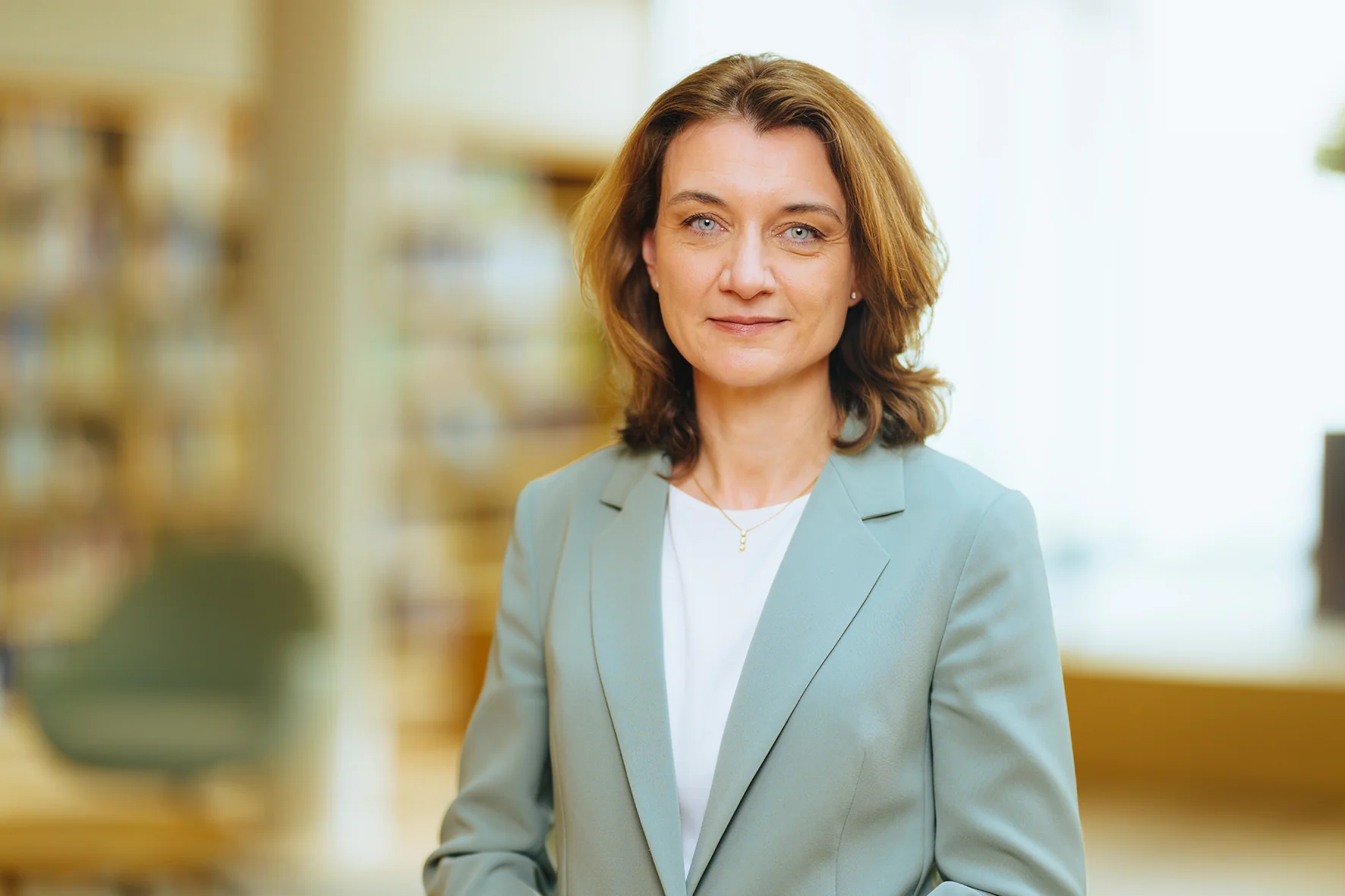
Image from Wikipedia
Image from Wikipedia
Daniela Schwarzer – a defining voice for Europe, politics, and public debates
Intellect, analysis, and leadership: The profile of Daniela Schwarzer
Daniela Carolin Schwarzer, born in 1973 in Hamburg, is one of the most prominent German political scientists of her generation. Her career path links journalism, research, think-tank work, foundation management, and academic politics into a remarkably clear, internationally networked trajectory. Her profile is particularly strong where European integration, international order, and democratic resilience meet the challenges of a changing world.
In contrast to traditional careers that follow a straight line, Schwarzer's path is characterized by intersections: she does not see politics in isolation, but in the interplay of institutions, the public, and global power shifts. It is precisely from this perspective that her work derives authority, visibility, and relevance. Understanding Daniela Schwarzer reveals an expert who combines analytical precision with a strategic outlook.
Early years, studies, and academic influences
Schwarzer studied political science and linguistics in Tübingen, with study visits to the University of Reading and the Institut d’études politiques de Paris, better known as Sciences Po. This academic upbringing laid the foundation for her later focus on Europe, international politics, and cross-border institutions. Early on, a profile emerges that intertwines linguistic, cultural, and political perspectives.
In 2005, she earned her doctorate at the Free University of Berlin in Political Economy with a dissertation on fiscal policy coordination in the Eurozone. Even this topic points to her central research interest: the functioning of the European order under conditions of crises, interdependencies, and political reform pressure. The academic depth of her work continues to underpin her public engagement today.
The entry into journalism and early political debates
In 1999, Schwarzer began her career as an editor and France correspondent for Financial Times Deutschland in Paris. This entry was crucial for her later career as it integrated economic analysis, international observation, and journalistic communication. Paris thus becomes not only a geographical location but also an early laboratory for her European perspective.
This journalistic phase sharpened her understanding of how political developments are publicly explained and contextualized. Working between editorial offices, government debates, and international reporting fosters a sense for timing, language, and political drama. These qualities later significantly shape her work in think tanks and foundations.
Rising to prominence as a European expert in think tanks and research institutes
After her time in journalism, she held positions in renowned think tanks and research institutions. Schwarzer worked, among others, at the Stiftung Wissenschaft und Politik and became the director of the German Council on Foreign Relations (DGAP) research institute in 2016. There, she established herself as one of the key voices on EU reforms, transatlantic relations, and security policy issues.
The DGAP marked a phase of increased institutional visibility. Official DGAP publications feature contributions and books under her name, including works on Europe's role in the world and strategic foreign policy. Her role as a scientific leader represented analytical authority and the ability to translate complex geopolitical contexts into action-oriented debates.
Bertelsmann Stiftung: Responsibility for democracy and the future of Europe
In 2023, Schwarzer was appointed to the board of the Bertelsmann Stiftung. The foundation emphasized her foreign and European policy perspective as well as her international experience at that time. Content-wise, she was responsible for the programs "Europe's Future" and "Democracy and Cohesion," and since August 2025, additionally served in an interim capacity for the "Sustainable Social Market Economy" program.
In May 2026, Bertelsmann Stiftung announced that Schwarzer would leave the board on June 30, 2026. This development marks the end of an important chapter but does not change her substantive impact: she was a defining voice for democratic resilience, European agency, and institutional renewal. The foundation explicitly acknowledged her contributions to democracy and the European idea.
Hertie School and the academic perspective on public leadership
Alongside her work in politics and foundations, Schwarzer is listed as the designated president of the Hertie School in Berlin. This school specializes in public policy, governance, and international leadership training, aligning perfectly with her profile. At this intersection of science, administration, and public debate, her experience unfolds particular significance.
The Hertie School sees itself as a place for socially impactful education and research. In this environment, Schwarzer's strategic insights converge with an institution whose self-understanding is oriented towards good governance, international networking, and public responsibility. This makes her role not only administratively significant but also symbolically important.
The themes that shape Daniela Schwarzer: Europe, security, and democracy
In her official statements and publications, Schwarzer consistently addresses the broad lines of European policy. She advocates for a capable, more resilient Europe that combines domestic stability with foreign policy independence. Central to this are democracy, digital sovereignty, and institutional resilience.
Her approach is particularly evident in the connection between strategic thinking and normative stance. She does not view European integration as an abstract project but as a political necessity in a world marked by growing systemic competition, disinformation, and geopolitical uncertainty. This lends weight to her public voice beyond the German discourse.
Publications and public reception
Web searches reveal a notable publication and speaking activity, particularly in connection with the DGAP and the Bertelsmann Stiftung. Contributions on European roles, foreign policy, security policy, and democratic renewal appear there. These texts illustrate that Schwarzer not only analyzes but also frames debates and highlights political priorities.
Her public perception is correspondingly strong: she is regarded as one of the leading German experts on European and international politics and is frequently invited for interviews, panels, and statements. Reception emphasizes her ability to articulate complex geopolitical issues understandably, but without oversimplification.
Cultural and political influence
Daniela Schwarzer represents a type of intellectual that has become rare in the German public sphere: scientifically grounded, institutionally experienced, and media-savvy. Her influence lies less in loud appearances than in the lasting shaping of issues central to Europe. These include the future of the EU, the stability of democratic institutions, and Germany's role in a fragmented world.
Her work impacts multiple places simultaneously: in research, in foundation practices, in academic settings, and in the political public sphere. This multiple anchoring makes her an authority whose statements arise not from the moment but from years of experience and structural understanding.
Conclusion: Why Daniela Schwarzer remains intriguing
Daniela Schwarzer is intriguing because she does not perceive European politics as a buzzword but as a challenging task of design. Her life path combines journalistic sharpness, academic depth, and institutional responsibility into a profile that is both rare and valuable in public debate. Those who follow her journey discover a personality that precisely analyzes complex developments while maintaining a focus on the feasible.
It is precisely her blend of analysis, leadership, and public impact that makes her a defining voice of her time. Anyone interested in Europe, democracy, and international order should closely follow her work and experience her public appearances.
Official channels of Daniela Schwarzer:
- Instagram: No official profile found
- Facebook: No official profile found
- YouTube: No official profile found
- Spotify: No official profile found
- TikTok: No official profile found
Sources:
- Wikipedia – Daniela Schwarzer
- Bertelsmann Stiftung – Daniela Schwarzer becomes a board member of the Bertelsmann Stiftung
- Bertelsmann Stiftung – Daniela Schwarzer leaves the board of the Bertelsmann Stiftung
- Bertelsmann Stiftung – Innovation creates future
- DGAP – New Director of the DGAP’s Research Institute Takes Office
- DGAP – Daniela Schwarzer
- Hertie School – Our story
- Hertie School – Facts and figures