
Chet Baker
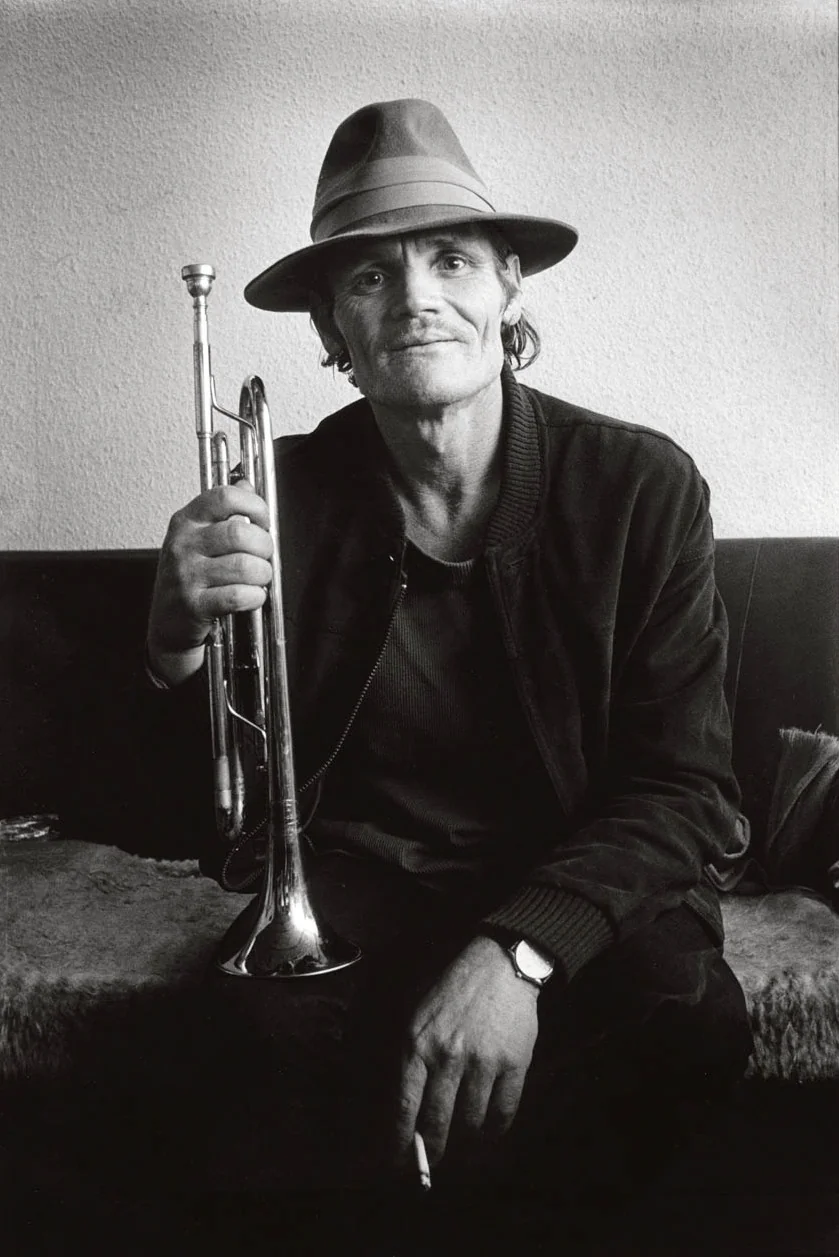
Image from Wikipedia
Image from Wikipedia
Chet Baker – The Fragile Elegance of Cool Jazz
The Gentleman with the Trumpet: Chet Baker Between Light, Shadow, and Legend
Chet Baker, born Chesney Henry Baker Jr., was one of the most influential voices in American jazz of the 20th century. As a trumpeter, flugelhorn player, singer, and composer, he combined technical clarity with a vulnerable, almost fragile sound that quickly made him a cult star. His career embodies the significant tension between artistic elegance and biographical tragedy. ([britannica.com](https://www.britannica.com/biography/Chet-Baker))
Born on December 23, 1929, in Yale, Oklahoma, and passing away in 1988 in Amsterdam, Baker became famous as a key figure in West Coast Cool Jazz. His playing was regarded as introspective, lyrical, and controlled, while his voice was described as intimate and distinctive—never loud, never boastful, always focused on the essence of the melody. It was this very aura that has since made his name inseparable from style, melancholy, and stylistic reduction. ([britannica.com](https://www.britannica.com/biography/Chet-Baker))
From the Military to the Jazz Scene: The Early Years
Baker grew up in California starting from the age of ten and began playing trumpet in the school band. He served from 1946 to 1948 and again from 1950 to 1952 in U.S. Army bands before establishing himself in the jazz scene around San Francisco. During this period, he frequently played with other West Coast giants and developed the clear tone that soon became his trademark. ([britannica.com](https://www.britannica.com/biography/Chet-Baker))
The decisive breakthrough came in 1952 as a member of Gerry Mulligan's famous pianoless quartet. Pieces like "Walkin' Shoes," "Bernie's Tune," and especially "My Funny Valentine" made Baker internationally known and established him as a new voice in modern jazz. In 1953, readers of Metronome voted him the best trumpeter of the year; the same year, he formed his own group. ([britannica.com](https://www.britannica.com/biography/Chet-Baker))
The Breakthrough: Cool Jazz, Fame, and the Era of Great Standards
The early recordings of the 1950s are still regarded as some of the most important documents of Cool Jazz. Particularly the European tours in 1955 and 1956 bolstered Baker's reputation; the recordings made during these tours are considered high points of his early career. Both critics and audiences responded to the blend of loose phrasing, economical approach, and melodic precision. ([britannica.com](https://www.britannica.com/biography/Chet-Baker))
His fame was based not only on his trumpet playing. Baker also had a distinctive quality as a singer: soft, vulnerable, close to the text, with an almost speaking intimacy. The Riverside album "Chet Baker Sings" and its subsequent recordings marked a key phase in his discography, making him an exceptional artist capable of captivating both instrumentally and vocally. ([mediakits.concord.com](https://mediakits.concord.com/p/the-legendary-prestige-quintet-sessions/press-release.html))
The Discography as a Reflection of an Exceptional Career
Chet Baker's discography is extensive and stylistically diverse. Early cornerstones include "Chet Baker Quartet featuring Russ Freeman," "Chet Baker Sings," "Chet Baker Sings and Plays," "Chet Baker in Europe," and "Playboys." Later important milestones include "Chet," "Chet Baker in New York," "Chet Baker in Milan," the Prestige series from the mid-1960s, and late European and live recordings like "Strollin'" and "Chet's Choice." ([en.wikipedia.org](https://en.wikipedia.org/wiki/Chet_Baker_discography))
Notably, Baker's discography visibly reflects his life path: early classics, phases of artistic realignment, prolonged periods of nomadism, and ultimately late recordings where his expressiveness often seems even more concentrated despite all the ruptures. All About Jazz describes his late European recordings as more mature, sometimes brilliant, characterized by greater simplicity and depth. This is precisely where the fascination of his musical career lies: each phase tells something different about maturity, loss, and perseverance. ([allaboutjazz.com](https://www.allaboutjazz.com/musicians/chet-baker/))
Style and Sound: The Quiet Glow of Melancholy
What set Chet Baker apart from many of his contemporaries was his radical economy. He did not play for effect, nor did he seek virtuosity for its own sake, but focused on melody, line, and the air between the notes. Britannica describes his sound as plaintive and fragile, while jazz scholars characterize his improvisations as driven by a "disenchanted lyricism." This blend made him the epitome of a controlled, emotionally charged Cool aesthetic. ([britannica.com](https://www.britannica.com/biography/Chet-Baker))
His voice followed this logic as well. Baker did not sing like a traditional crooner; rather, he sang almost like a brass instrument, shaping the melody with minimal pressure. Particularly in standards like "My Funny Valentine" or in the Riverside recordings, it becomes evident how closely intertwined his singing and trumpet playing were. The result is a distinctive dialogue of tone, breath, and silence. ([mediakits.concord.com](https://mediakits.concord.com/p/the-legendary-prestige-quintet-sessions/press-release.html))
Breaks, Downfalls, and European Rebirth
The second half of his career was marked by massive personal crises. Drug addiction, jail terms, and hospital stays repeatedly interrupted his career from 1957 onward, yet Baker remained active as a musician. This very contradiction reinforced the myth: the celebrated stylist whose life fell into disarray, yet whose art never entirely lost its fragile beauty. ([jazzecho.de](https://www.jazzecho.de/chet-baker/biografie))
In the 1980s, Baker lived and worked almost exclusively in Europe. There, late recordings and performances emerged that impressively reaffirmed his artistic substance. He re-emerged for a new generation in 1983 through Elvis Costello's "Shipbuilding," and in the last years of his life, films and live recordings like "Chet Baker in Tokyo" and "Let’s Get Lost" documented his late presence with almost documentary intensity. ([en.wikipedia.org](https://en.wikipedia.org/wiki/Chet_Baker))
Critical Reception, Awards, and Cultural Influence
Critics recognized Baker as a central figure in Cool Jazz and as a voice that profoundly shaped West Coast Jazz. Encyclopedia.com regards him as a key figure in this movement, while Britannica emphasizes his importance in jazz history and notes his early rank as a top trumpeter. His induction into the Jazz Hall of Fame, the Oklahoma Jazz Hall of Fame, and the Grammy Hall of Fame Award for "Chet Baker Sings" underscores his canonical status. ([encyclopedia.com](https://www.encyclopedia.com/education/news-wires-white-papers-and-books/baker-chet))
His influence extends far beyond jazz. Films like "Let’s Get Lost" and "Born to Be Blue" turned him into a pop culture icon, while artists like Nick Murphy even chose their stage name in homage to Baker. Current projects underscore his ongoing relevance: in 2025, new posthumous releases and tributes like "Chet Baker Re:imagined" and "Swimming by Moonlight" aimed to translate his music into the present. ([en.wikipedia.org](https://en.wikipedia.org/wiki/Chet_Baker))
Current Releases and Late Legacy
Although Chet Baker has not lived since 1988, his music continues to be reissued in new editions, collections, and curated projects. In 2025, Decca released "Chet Baker Re:imagined," a tribute compilation that recontextualizes Baker's legacy for a younger, genre-blurring audience. Similarly, "Swimming by Moonlight," a soundtrack album featuring previously unreleased material from the "Let’s Get Lost" sessions, was released in 2025. ([universalmusic.ca](https://www.universalmusic.ca/press-releases/chet-baker-reimagined-genre-blurring-tribute-to-a-jazz-icon-from-a-new-generation-of-international-artists/))
Additionally, there are further reissues and historical box sets, including "The Legendary Riverside Albums," announced by Craft Recordings, which carefully revive Baker's central Riverside phase through meticulous archival work. Such releases confirm that Baker is not just a historical name but a continually vibrant reference point for jazz listeners, collectors, and musicians alike. ([mediakits.concord.com](https://mediakits.concord.com/p/the-legendary-prestige-quintet-sessions/press-release.html))
Conclusion: Why Chet Baker Remains Fascinating Today
Chet Baker remains captivating because his work represents a rare connection of beauty, vulnerability, and stylistic consistency. Few other jazz musicians have embodied Cool Jazz so directly, so humanly, and so distinctively. His recordings still sound modern today because they emphasize attitude, timing, and emotion rather than volume. ([britannica.com](https://www.britannica.com/biography/Chet-Baker))
Those who listen to Chet Baker encounter not only a trumpeter and singer but a whole aesthetic of reduction. It is precisely the tension between early brilliance, artistic greatness, and a tragic life path that makes his legend so enduring. Those who want to experience jazz in its most intimate form should continually rediscover this music and understand the late, almost ethereal intensity of his recordings as an invitation to let the spirit of Chet Baker continue to live on in the sound of the records. ([en.wikipedia.org](https://en.wikipedia.org/wiki/Chet_Baker))
Official Channels of Chet Baker:
- Instagram: no official profile found
- Facebook: no official profile found
- YouTube: no official profile found
- Spotify: no official profile found
- TikTok: no official profile found
Sources:
- Britannica – Chet Baker
- Encyclopedia.com – Baker, Chet
- All About Jazz – Chet Baker
- JazzEcho – Chet Baker Biography
- Craft Recordings / Concord – The Legendary Riverside Albums
- Universal Music Canada – Chet Baker Re:imagined
- Wikipedia – Chet Baker
- Wikipedia – Chet Baker discography
- Wikipedia – Swimming by Moonlight
Upcoming Events
Chettin'5 - More from Chet and Stan
Cinema & Wine: Born to Be Blue in Amberg