Social Projects and Initiatives in Karlsruhe
Social Projects & Initiatives Moving Karlsruhe in the Coming Months
In the coming months, numerous social initiatives will once again become visible in Karlsruhe: in neighborhoods, schools, sports facilities, counseling centers, and at open meeting formats. This overview summarizes which types of projects are likely to be in focus, where you can get involved in the future, and what matters in terms of funding, transparency, and impact.
Contents
Funding Logic: How Projects Plan Impact in the Next Funding Period
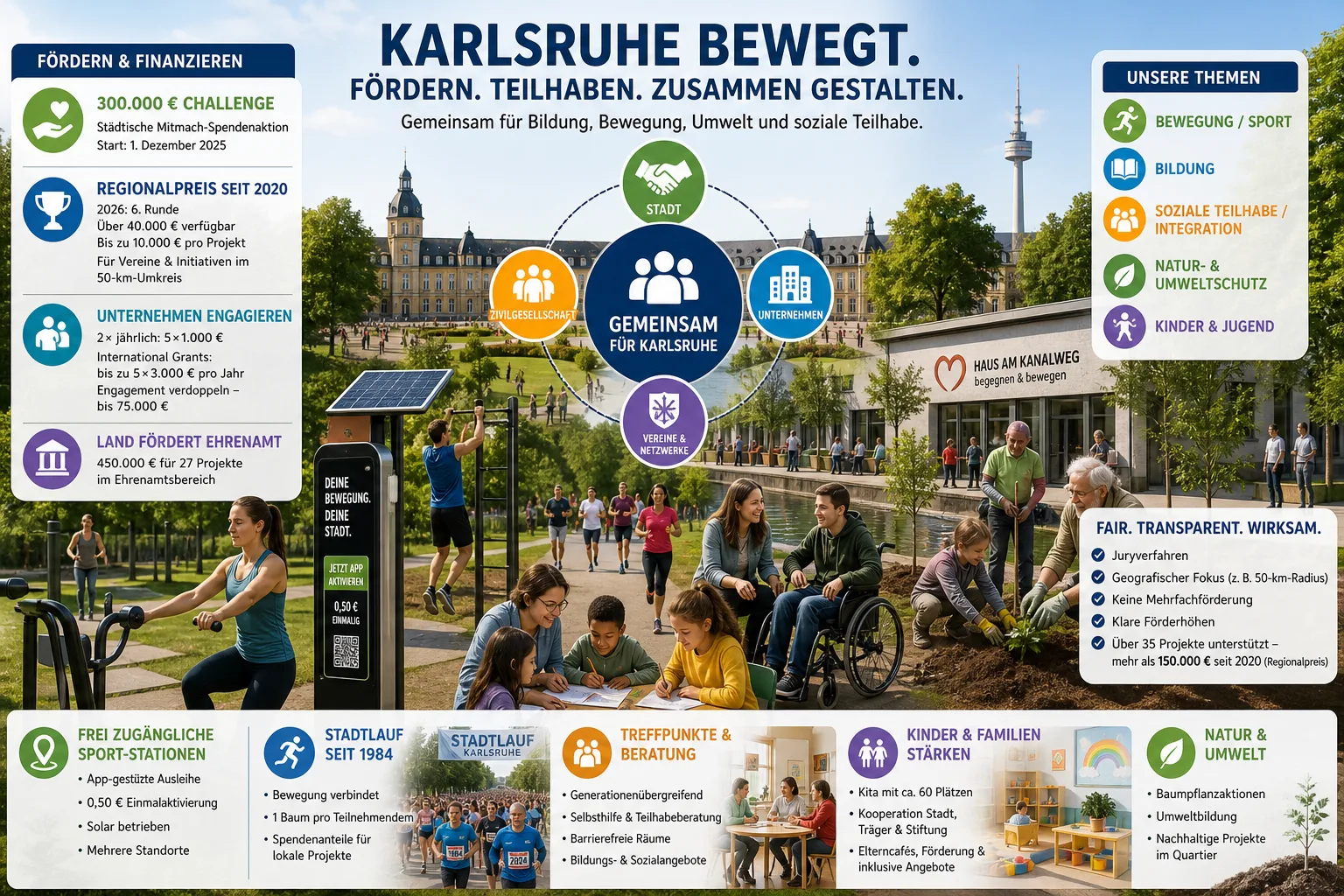
When new social initiatives start in Karlsruhe or existing services are expanded, this usually happens through a mix of donations, competitive tenders, foundation funding, as well as municipal and statewide programs. For the upcoming funding period, it is especially crucial that projects describe their impact in a plausible, measurable, and target group-oriented way.
What Funders Will Especially Expect in the Future
- Clear Purpose and Target Group: Who is supposed to benefit specifically (e.g., children, youth, caregivers, people with disabilities, newcomers)?
- Implementation Plan: Location, frequency, responsibilities, partnerships, resources.
- Protection Concept & Safety: Especially for services involving minors, protection concepts and clear responsibilities are increasingly a prerequisite.
- Proof of Impact: Simple indicators (participation numbers, feedback, referrals, stabilization of everyday skills) instead of mere declarations of intent.
- Sustainability: What remains after the project ends (e.g., qualified volunteers, stable group, lasting cooperation)?
For initiatives, it is worthwhile to plan a funding strategy early: initially smaller amounts for pilot phases (e.g., materials, room rental, qualification), then larger applications for scaling up (e.g., regular group offers, coordinated neighborhood work, professional counseling).
Focus Areas 2026/2027: Movement, Education, Participation, Environment
In the coming months, projects in Karlsruhe will likely be in demand that are close to everyday life, low-threshold, and connect various areas of life. Four thematic fields are often at the center:
1) Movement & Sports as a Social Engine
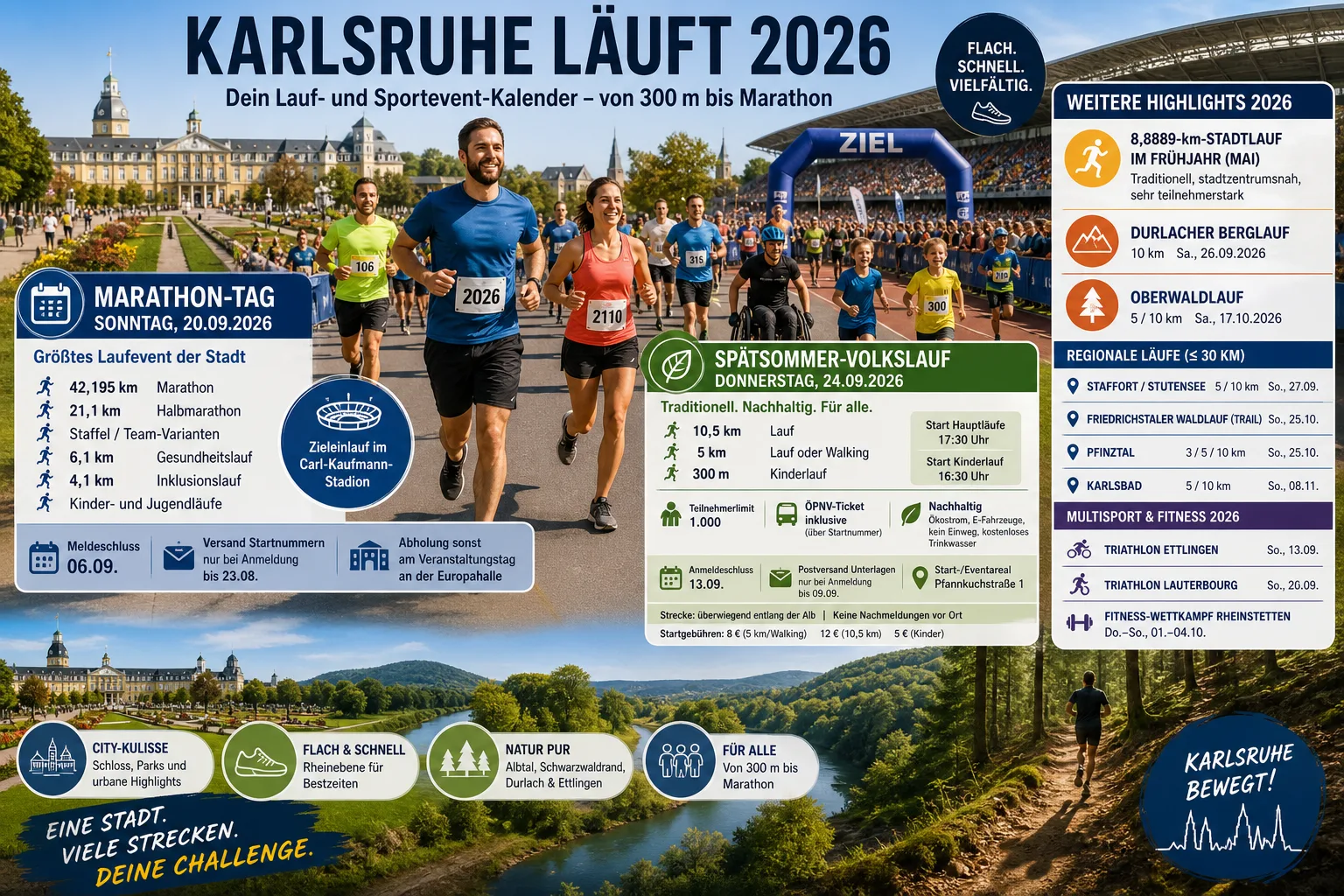
Planned and newly emerging movement offers in public spaces can enable encounters, reduce stress, and lower barriers: short sessions, open groups, low-barrier access, and clear rules for respectful interaction. Formats that also strengthen a sense of belonging are particularly effective (e.g., regular running or walking meetups, inclusive play and sports sessions, movement activities in parks).
2) Education & Opportunities for Children and Youth
For the next season, projects that secure transitions are important: from daycare to school, from school to training, from training to work. This includes learning support, mentoring, parent cafés, media literacy training, language support, and low-threshold counseling that provides practical relief for families.
3) Social Participation & Everyday Integration
Initiatives that reduce loneliness, strengthen self-help, or facilitate access to counseling will remain particularly relevant in the coming months. This includes open meeting places, moderated groups, support in accessing services, and offers that can be used regardless of income or background.
4) Nature & Environmental Protection with Social Added Value
For 2026/2027, projects that combine climate and environmental topics with participation are promising: joint planting and maintenance activities, environmental education for children and youth, or neighborhood formats that bring together nature experiences and community. It is crucial that ecological goals are linked to clear social effects (e.g., regular groups, qualification, intergenerational learning).
Neighborhood Work in Practice: What Will Be Especially Needed in Districts Soon
Neighborhood work will have an impact in the coming months, especially where it addresses concrete everyday problems: lack of meeting places, information gaps, hurdles with authorities, language barriers, loneliness, or overwhelm in families. Good neighborhood projects are not abstract, but visible and recurring.
Typical Building Blocks That Will Work Especially Well in the Future
- Open meeting points with reliable times: plannable, friendly, without consumption pressure.
- Guidance and counseling services: support in finding the right contact point (e.g., social benefits, care, education, participation).
- Local partnerships: schools, daycare centers, sports clubs, church communities, neighborhood initiatives, counseling centers.
- Low-threshold qualification: short training sessions for volunteers (conversation skills, setting boundaries, data protection, child protection).
- Low-barrier access: clear language, multilingual information, good accessibility, inclusive design.
Anyone who wants to start a new project in Karlsruhe should clarify early on how participants will be reached (e.g., through schools, neighborhood distribution lists, community centers, association networks) and how feedback will be systematically collected (e.g., short questionnaires, feedback rounds, anonymized suggestion box).
Get Involved: Concrete Ways for Citizens, Associations, and Companies
In the coming months, you can get involved in Karlsruhe on several levels. It is important to choose a form that realistically fits your everyday life—because reliability is often more valuable than rare large-scale actions in social projects.
For Citizens
- Regularly instead of once: e.g., weekly learning support, escort services, group moderation, sports meetups.
- Skill donations: translation, application training, media literacy, first aid, organization.
- Targeted donations: to organizations with transparent goals and comprehensible reports (see section Transparency & Trust).
For Associations & Initiatives
- Project concept on 1 page: target group, goal, offer, location/times, team, costs, impact criteria.
- Involve cooperation partners early: spaces, multipliers, joint public relations.
- Clarify data protection & consents: especially for photo/video and sensitive counseling matters.
For Companies
- Corporate volunteering with a clear task: e.g., renovation, IT support, workshop days.
- Matching donations: donation campaigns where employee contributions are doubled.
- Donations in kind with a needs list: targeted instead of "leftovers" (e.g., laptops, sports equipment, furniture in good condition).
Current opportunities to get involved, dates, and calls for participation are typically published via municipal information pages, local provider networks, and the respective event and engagement calendars. Before committing, always check the scope, insurance coverage, and local contact person.
Transparency & Trust: How to Check Reputable Projects
To ensure that engagement really makes an impact in the coming months, a quick trust check is worthwhile—especially for donation appeals or offers working with children, youth, or vulnerable groups.
Checklist for Donations & Funding Decisions
- Imprint & Contact: clear responsibilities, reachable contact person.
- Purpose restriction: what is the money specifically used for (materials, staff, space, qualification)?
- Reports: comprehensible updates (annual report, project report, figures, examples).
- Data protection: transparent information on data handling.
- Donation control: orientation is provided, for example, by recognized standards such as the DZI donation seal (if available) or published annual financial statements.
Note: This article provides editorial guidance for future engagement and does not replace individual legal or financial advice.